Pool Inspection Costs in Austin, TX: The Complete 2026 Guide
A standard pool inspection in Austin costs between $150 and $350, with most homeowners paying $200 to $250 for a standalone residential inspection. That covers a trained inspector’s evaluation of every major system: structure, equipment, plumbing, electrical, and safety barriers, typically completed in one to two hours.
The investment is modest compared to what it prevents. A failing pump costs $600 to $1,200 to replace. A plumbing leak runs $200 to $1,000 to fix. Full resurfacing starts at $6,500 per 1,000 square feet. At Bluewater Pool Service, our technicians hold CPO, CMS, CPI, RAIL, and OSHA certifications through the Pool & Hot Tub Alliance, and we’ve maintained a BBB A-rating since March 2021. We catch these issues regularly during inspections and routine maintenance visits, often saving homeowners thousands in preventable repair costs.
What Austin Homeowners Actually Pay for Pool Inspections
No single database tracks Austin-specific pool inspection pricing, but cross-referencing national consumer guides with Central Texas market data produces a reliable picture.
Inspection Type | Cost Range | Notes |
Austin standalone | $150–$350 | Most homeowners pay $200–$250 |
Austin bundled add-on | $50–$135 | Added to a full home inspection |
San Antonio standalone | $85–$300 | Austin typically runs 15–30% higher |
National average (Angi) | $85–$1,075 | Wide range due to market variation |
Specialized leak detection | $150–$400 | Outside standard inspection scope |
Structural assessment | $200–$400 | Separate from standard visual |
Austin’s higher cost of living pushes prices 15 to 30 percent above comparable San Antonio rates, which typically run $85 to $300 for a standalone inspection. Bundling a pool inspection with a full home inspection is the most cost-effective approach for homebuyers, cutting the cost by 50 to 65 percent.
What Drives Price Variation
Seven factors account for most of the spread in inspection costs:
- Pool size: Pools over 800 square feet typically add $50 to $100 to the base price
- Pool type: Gunite, vinyl, and fiberglass pools each have different failure modes requiring different expertise
- Age and condition: Pools that haven’t been professionally inspected in five to ten years cost more to assess
- Additional features: Spas, water features, and saltwater systems add 10 to 25 percent
- Inspection depth: A basic visual starts around $125; a comprehensive inspection with equipment testing and photo documentation runs $225 to $350
- Bundling: Combining with a home inspection cuts costs by 50 to 65 percent
- Timing: Peak summer demand carries a 25 to 50 percent premium; off-season inspections (fall and winter) typically save 5 to 20 percent in labor costs
What Inspectors Actually Look At
A standard pool inspection follows published standards from InterNACHI and ASHI, covering six major areas during a non-invasive visual examination. Inspectors do not enter the water, drain the pool, or test water chemistry under standard protocols.
- Structural assessment: The pool shell is checked for cracks, discoloration, pitting, and open joints, along with tile, coping, steps, handrails, and ladders.
- Decking and surrounding areas: Inspectors look for slip-resistant surfaces, proper drainage slope, trip hazards, expansion joints, and evidence of settlement.
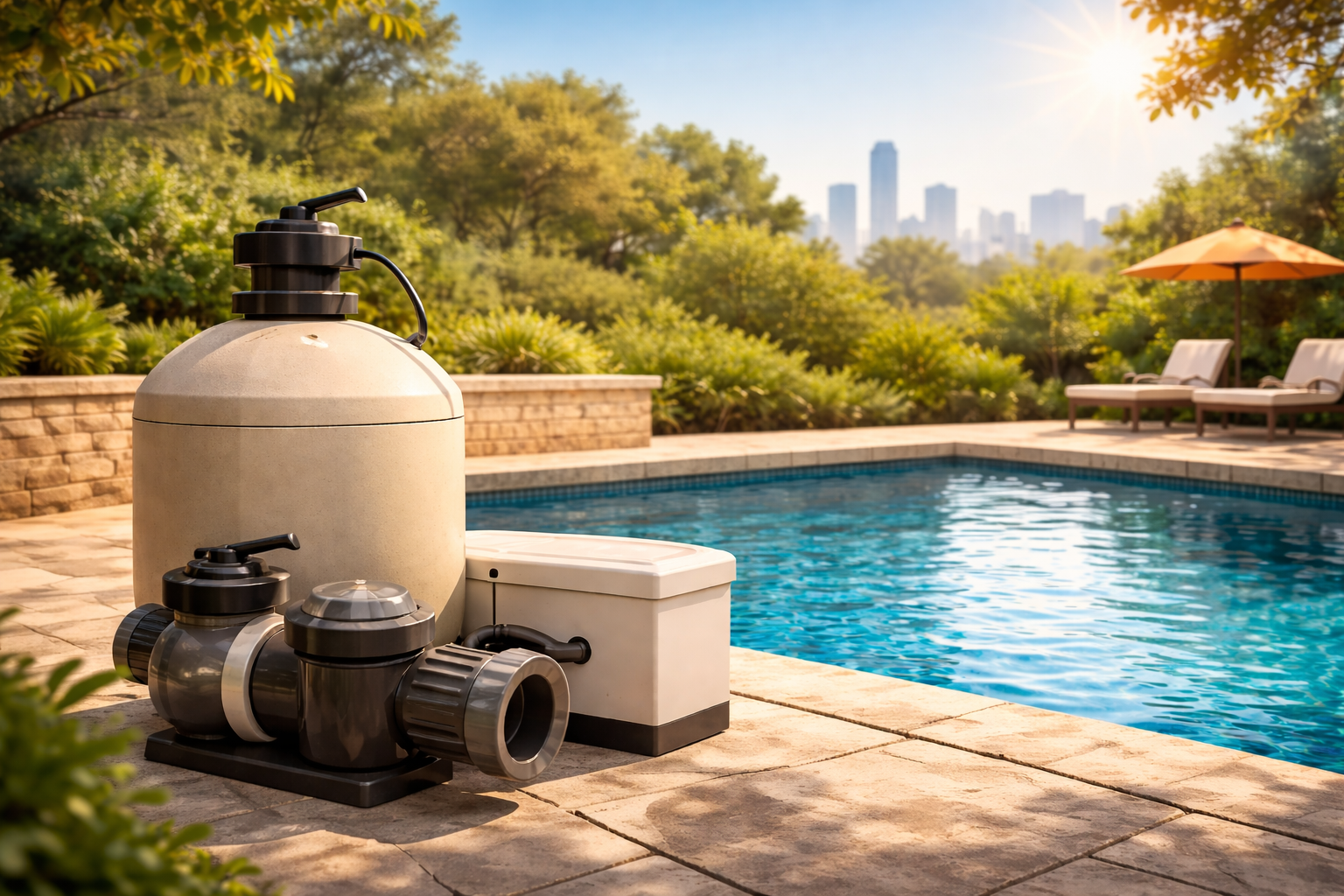
- Mechanical equipment: Pumps, motors, filters (cartridge, sand, or diatomaceous earth), heaters, skimmers, blowers, and all gauges and valves are examined for condition and function.
- Plumbing: Review covers main drain grates, return inlets, visible piping, and entrapment prevention components required under the federal Virginia Graeme Baker Pool and Spa Safety Act.
- Electrical systems: Inspectors confirm GFCI protection, proper bonding of pump motors and equipment, pool light operation, timers, controllers, and electrical disconnects.
- Safety barriers: Fencing height (minimum 48 inches under Texas law), self-closing and self-latching gate mechanisms, door alarms, and pool covers are all assessed.
When You Actually Need a Pool Inspection
Buying a Home with a Pool
This is the most common and most important time to get an inspection. Texas does not legally require a pool inspection to buy or sell a home. Under TREC Standards of Practice (22 TAC § 535.233), swimming pools are classified as “Optional Components or Systems” and are excluded from a standard home inspection unless you specifically request and pay for the add-on.
Given that 51.9% of Austin-Round Rock listed homes feature a pool (fourth nationally for pool prevalence, per Realtor), skipping the inspection means leaving potential negotiating leverage on the table. Austin pools add an average of $28.67 per square foot to home values, the second-highest pool premium in the nation per Redfin. Confirming the pool’s condition, or documenting what it needs, directly affects what you should pay for the property.
Texas Property Code § 5.008 requires sellers to disclose known pool defects and whether the pool has a single blockable main drain. Sellers who fail to disclose known problems face claims under the Texas Deceptive Trade Practices Act, with potential treble damages.
Insurance and Lender Requirements
Some insurers and mortgage lenders require a pool inspection before issuing coverage or funding a purchase. The Texas Department of Insurance notes that many standard homeowners policies provide minimal liability coverage for swimming pools, and some carriers won’t renew coverage for improperly maintained pools. Adding an in-ground pool typically raises annual premiums by 10 to 30 percent.
Annual and Periodic Maintenance Checks
Annual inspections are best practice, especially for pools older than ten years or pools that haven’t been professionally examined in five or more years. At Bluewater Pool Service, our weekly pool maintenance visits function as rolling mini-inspections: we check equipment, assess visual condition, and verify water chemistry at every service call. Problems that might cost $250 to $500 to address early can escalate into $1,500 to $2,500 repairs if left undetected.
Austin’s Regulatory Requirements for Pool Owners
Austin pools operate under overlapping federal, state, and local requirements that directly affect what inspectors look for and what homeowners must maintain.
Federal: The Virginia Graeme Baker Pool and Spa Safety Act mandates specific anti-entrapment drain cover designs with stamped lifespans, typically five to seven years. Expired covers must be replaced. New construction requires dual main drains separated by at least three feet or single “unblockable” channel drains.
Texas state (Health and Safety Code Chapter 757): Barriers must be at least 48 inches tall with no openings exceeding four inches, self-closing and self-latching gates that swing away from the pool, gate latches positioned at least 54 to 60 inches from the ground, and door alarms on any house door providing direct pool access. Chain link fencing is prohibited for enclosures built after January 1, 1994.
City of Austin: Austin has adopted the 2026 National Electrical Code, including enhanced Article 680 provisions for equipotential bonding of pool decks and equipment. Universal GFCI protection is now required on all pool electrical equipment. Replacing a pump in 2026 often triggers a requirement to upgrade to a GFCI breaker. The city also requires a “Certification of Pool Protection Device Installation” for new pool construction via third-party inspection.
Under Austin’s Title VI Water Quality Code, discharging chlorinated pool water, filter backwash, or saltwater into the storm sewer or onto the street is a violation. Water must go onto the homeowner’s lawn or into the sanitary sewer via a cleanout. Non-compliance penalties run $200 to $1,000 per day.
How to Find a Qualified Inspector in Austin
Texas has no standalone “pool inspector” license. Two tracks exist depending on your situation.
For real estate transactions: Look for a TREC-licensed home inspector who lists pool inspection as an add-on service, plus membership in either InterNACHI or ASHI, both of which publish dedicated Standards of Practice for pool and spa inspections.
For equipment and condition assessments outside of home sales: Pool service companies with certified technicians are a practical and often more affordable alternative.
The Pool & Hot Tub Alliance (PHTA) administers the most meaningful pool industry certifications:
- CMS (Certified Maintenance Specialist): Entry-level maintenance competency
- CPO (Certified Pool/Spa Operator): The industry standard for water chemistry and operations, legally mandated for public and commercial pool operators in Texas
- CPI (Certified Pool Inspector): Specialized pool inspection competency
- CST (Certified Service Technician): Intermediate troubleshooting and electrical knowledge, requiring two years of experience
Any company performing electrical work on pool equipment must also hold a Residential Appliance Installer License (RAIL) from TDLR. The RAIL exam has approximately a 28 percent pass rate. TDLR fines for unlicensed electrical work start at $2,000 per occurrence, and using unlicensed contractors can void manufacturer warranties and homeowner insurance policies.
At Bluewater Pool Service, all technicians carry CPO, CMS, CPI, RAIL, and OSHA certifications. We’re also a Jandy Preferred Warranty Service Station and authorized service provider for Hayward and Pentair equipment.
The Math: Why a $200 Inspection Prevents a $10,000 Surprise
Nearly every common pool repair costs 10 to 100 times more than the inspection that could have caught it early. John Uhle, a product expert quoted in Bob Vila’s pool repair guide, puts it plainly: regular equipment inspection can extend its lifespan and catch small issues before they grow into costly ones.
Issue | Early Repair Cost | Cost If Ignored |
Failing pump seal | $250–$500 | $1,500–$2,500 (full pump replacement) |
Early plumbing leak | $200–$400 | $350–$2,700 (in-ground repair) |
Heater thermostat issue | $150–$400 | $2,800–$4,500 (heat exchanger) |
Small structural crack | ~$75/linear ft | $4,000–$6,000 (major structural repair) |
Electrical bonding deficiency | $200–$500 | Safety hazard + $200–$1,000/day fines |
Plaster degradation | Monitor + targeted repair | $6,000–$15,000 (full resurfacing) |
Expired VGB drain cover | $50–$150 | Entrapment risk + code violation |
Jimmie Meece, Brand President of America’s Swimming Pool Company, notes that pool repairs can range from $100 to $20,000 depending on pool size, damage extent, repair type, and material.
For homebuyers, the inspection also creates negotiating leverage. Documented equipment failure or a compromised liner gives a buyer grounds to request seller-funded repairs or a price reduction before closing. In Austin, where pools add an estimated $52,228 to average home values, confirming the pool’s condition is a direct financial interest.
The pool industry’s standard 50 percent rule also applies: if a repair costs more than half the replacement price and the equipment has passed the midpoint of its expected lifespan, replacement is the smarter investment. Inspections help homeowners make that call before emergency failure forces a rushed decision.
Frequently Asked Questions
Q: Is a pool inspection required when buying a home in Austin?
A: No. Under TREC Standards of Practice, swimming pools are classified as optional components and are excluded from a standard home inspection unless you request and pay for the add-on. Given how common pools are in Austin listings, requesting the add-on is strongly recommended.
Q: How long does a pool inspection take?
A: Most residential inspections take one to two hours depending on pool size, age, and the number of features (spas, water features, automation systems).
Q: Can a pool service company do an inspection, or do I need a home inspector?
A: For formal real estate transaction inspections, a TREC-licensed home inspector is the standard. For equipment and condition assessments outside of a home sale, CPO- and CPI-certified pool service technicians are a qualified and often more practical option.
Q: What certifications should a pool inspector have in Texas?
A: For home purchase inspections, look for TREC licensure plus InterNACHI or ASHI membership. For pool-specific assessments, CPO and CPI certifications from the Pool & Hot Tub Alliance indicate genuine technical competency. Any company doing electrical work should also hold a RAIL license from TDLR.
Q: When is the cheapest time to schedule a pool inspection in Austin?
A: Fall and winter inspections typically save 5 to 20 percent compared to peak summer rates, and scheduling off-season also means faster availability.
Schedule a Pool Inspection with Bluewater Pool Service
If your Austin pool is due for a thorough assessment, our certified technicians are equipped to evaluate every major system and give you a clear picture of where your pool stands. We hold CPO, CMS, CPI, RAIL, and OSHA certifications, maintain a BBB A-rating, and are active members of the Pool & Hot Tub Alliance.
Call us at 512-886-7665 or contact us online to schedule an inspection or discuss your pool’s needs.