Selling a House with a Pool in Texas: 2026 Guide
A pool can add between 5% and 10% to a Texas home’s sale price, one of the highest premiums in the country. But capturing that value isn’t automatic. It requires knowing what the law requires you to disclose, what buyers and inspectors will look for, and how to get the pool into the kind of condition that earns a premium rather than invites a low offer.
At Bluewater Pool Service, a CPO-, CMS-, CPI-, RAIL-, and OSHA-certified pool service company with a BBB A-rating and active Pool & Hot Tub Alliance membership, we work with homeowners across Austin and San Antonio who are preparing their pools for sale. The pattern we see consistently: sellers who treat the pool as a strategic asset tend to come out ahead. Sellers who don’t often find it become a negotiating liability. Here’s what strategic preparation actually looks like.
How Much Does a Pool Add to Home Value in Texas?
The premium varies by market, but Texas consistently ranks among the best states in the country for pool-related value gains. A Redfin study analyzing home sales placed three Texas metros in the top 20 nationally:
Texas Metro | Pool Premium (Per Sq. Ft.) | Estimated Value Added | National Rank |
Austin | $28.67 | ~$52,228 | #2 |
Houston | $16.42 | ~$35,736 | #9 |
San Antonio | $10.04 | ~$18,541 | #18 |
Austin’s #2 ranking is largely a scarcity effect. Only 4.7% of Austin homes sold in the study period had pools, compared to 16.6% in Houston and 11.6% in San Antonio. When pools are less common, they stand out more to buyers and command a larger premium.
A May 2025 Realtor study found that nationally, homes with pools list for 54% more than comparable non-pool homes. The typical pool home is listed at $599,000 (2,450 sq. ft.) versus $389,000 (1,850 sq. ft.) for homes without one.
One important caveat: pools rarely return their full installation cost at resale. Texas real estate professionals generally place the ROI at 30% to 60%, meaning a $50,000 pool might recover $15,000 to $30,000 at sale. NAR’s 2023 Remodeling Impact Report put the national average at 56%. The takeaway is that pools are primarily a lifestyle investment that also adds real, though partial, value when you sell.
The Texas Pool Market
The same Realtor.com analysis found that Austin-Round Rock ranks #4 nationally for pool prevalence in listings, with 51.9% of listed homes featuring a pool. Houston ranks #8 at 38.8%, and recorded the second-largest increase in pool listings of any U.S. metro since 2019, a jump of 18.3 percentage points.
That growth matters for sellers. In suburban Houston corridors like Katy, Sugar Land, and The Woodlands, pools have increasingly become standard in new construction. Sellers of older pool-less homes face a competitive disadvantage, while sellers with well-maintained pools have a clear differentiation point.
One thing worth noting: the broader Texas housing market has continued shifting toward buyers heading into 2026. TRERC’s Texas Housing Insight (January 2026, based on November 2025 MLS data) puts statewide months of supply at 5.2, up from 4.5 a year earlier, with homes sitting on market for roughly 72 days statewide. Annual 2025 listings hit a record high, surpassing 565,000 total new listings for the year. Buyers have more choices and more negotiating room than at any point since before the pandemic. Overpricing based on the pool alone is a real risk. What separates pool homes that command a premium from those that linger is preparation and presentation.
What Texas Law Requires You to Disclose
Under Texas Property Code § 5.008, sellers of residential property must provide a written Seller’s Disclosure Notice on or before the effective date of the purchase contract.
The TREC Form 55-0 requires you to confirm whether the property includes a swimming pool and disclose awareness of any items not in working condition, with known defects, or in need of repair. One pool-specific item stands out: sellers must indicate awareness of a “Single Blockable Main Drain in Pool/Hot Tub/Spa,” listed alongside hazardous conditions like asbestos and lead paint.
You’re also required to disclose any condition that materially affects the physical health or safety of an individual, and any alterations made without required permits or building code compliance.
The consequences of incomplete disclosure are serious:
- If you fail to deliver the notice before contract execution, the buyer may terminate the contract within 7 days of receiving it
- Failure to disclose known pool defects can expose you to claims under the Deceptive Trade Practices Act and the Statutory Fraud Act, potentially resulting in treble damages and attorney’s fees
- Selling “as is” does not relieve you of the obligation to disclose known material defects
Two forms are legally acceptable: the TREC Form (No. 55-0), which meets minimum statutory requirements, and the Texas REALTORS® Form (TXR 1406), a more detailed five-page document.
Pool Fencing and Safety Code Compliance
Texas pool barrier requirements are more layered than many sellers realize. The state-level statute, Chapter 757 of the Texas Health & Safety Code, primarily governs multifamily and HOA pools, but its standards serve as the de facto benchmark and many municipalities apply similar or stricter rules to private residential pools.
The Chapter 757 requirements include:
- Pool yard enclosures must be at least 48 inches tall, with no opening exceeding 4 inches
- Gates must be self-closing and self-latching, swinging away from the pool
- Gate latches must be at least 60 inches from the ground
- When a wall of the home serves as part of the pool barrier, any door providing direct access to the pool must have an audible alarm (UL 2017 compliant) or a keyless bolting device installed 36 to 48 inches above the floor
- Chain link fencing is prohibited for enclosures built after January 1, 1994
Local rules can be stricter. Dallas requires 6-foot fencing. Austin requires third-party pool inspections and a “Certification of Pool Protection Device Installation” for new construction. Verify your specific municipality’s requirements before listing.
The liability dimension matters too. Swimming pools are a classic example of an “attractive nuisance” under Texas law, meaning property owners can be held potentially liable for injuries to trespassing children. Sellers remain liable for pool injuries on the property up to the date of closing, and can face post-closing liability for known defects they failed to disclose.
Should You Get a Pre-Listing Pool Inspection?
Texas does not legally require a pool inspection to sell a home. Under TREC Standards of Practice (22 TAC § 535.233), swimming pools fall under “Optional Components or Systems.” A standard home inspection does not automatically include the pool unless the buyer specifically requests it.
That said, a pre-listing pool inspection is one of the most effective things a seller can do. It lets you identify and fix issues before a buyer’s inspector flags them during the option period, which prevents those issues from becoming negotiating leverage against you.
When a pool inspection does occur, inspectors evaluate surfaces, tiles, coping, decks, drains, skimmers, valves, pumps, motors, filters, lighting, heaters, GFCI protection, electrical bonding, safety barriers, and the presence of a single blockable main drain.
Our technicians at Bluewater Pool Service hold CPO, CMS, CPI, RAIL, and OSHA certifications. We’ve maintained a BBB A-rating since March 2021 and are active members of the Pool & Hot Tub Alliance. If you’re preparing to sell in the Austin or San Antonio area, a pre-listing inspection identifies issues before they become your problem at the negotiating table.
The Costs Buyers Will Ask About
Informed buyers will scrutinize ongoing pool ownership costs, and having clear, documented answers puts you in a stronger position. Here’s a breakdown of typical annual costs for Texas pool owners:
Cost Category | Estimated Annual Cost |
Professional weekly maintenance | $1,440 to $3,600 |
Pool chemicals | $600 to $1,200 |
Electricity (pump, heater, lighting) | $360 to $1,800 |
Water (evaporation replacement) | $100 to $300+ |
Equipment repairs | $200 to $1,000 |
Additional insurance premium | $200 to $600+ |
Additional property tax | $200 to $600 |
Total estimated annual cost | $3,100 to $9,100 |
Texas’s climate creates several cost factors that buyers from other states may not anticipate:
- Evaporation can lower water levels by more than two inches per week during summer
- Intense UV radiation can destroy up to 90% of a pool’s free chlorine in a two-hour window without proper chemical stabilization
- Central Texas water from the Edwards Aquifer runs high in calcium carbonate, requiring specific chemical management that most other markets don’t need
On insurance: the Texas Department of Insurance notes that many standard homeowners policies provide minimal or no liability coverage for swimming pools, and some insurers won’t renew coverage for a pool that hasn’t been properly maintained. Adding an in-ground pool typically raises annual premiums by 10% to 30%.
One of the most useful things you can offer buyers is a documented maintenance history. At Bluewater, we store all service photos and chemical records digitally, creating a complete history of every visit. During a home sale, that documentation proves the pool has been professionally maintained, which goes a long way toward reducing buyer hesitation about ongoing costs.
If your maintenance history is incomplete, starting regular professional service several months before listing can help establish a record while getting the pool into top condition.
How to Prepare Your Pool for Sale
Pool preparation should work through a clear hierarchy before listing.
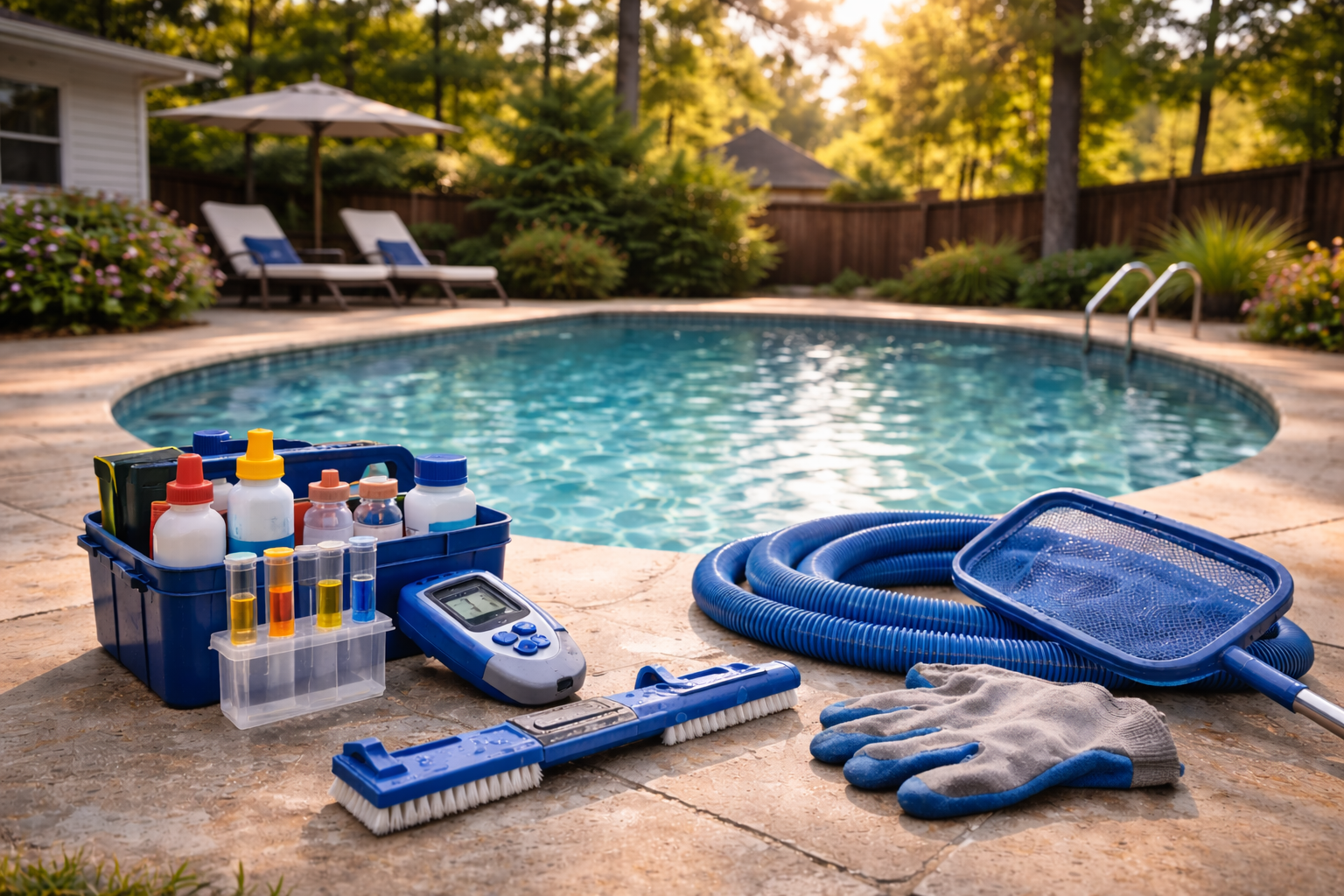
Start with chemistry and cleanliness. Pool water in Texas heat can turn green within days if the chemistry is off. A pool that looks clean on Monday can have visible algae growth by Friday. Make sure water chemistry is balanced and the pool is visually spotless before listing photos are taken. A green pool cleanup right before listing is not the look you want in listing photos or during showings.
Verify safety compliance. Check fencing height, gate function, latch placement, and door alarms where applicable. These aren’t optional. Failure to comply creates civil liability risk if an accident occurs before closing.
Address visible defects. Cracks, stains, broken tiles, malfunctioning lights, and noisy equipment all give buyers reasons to negotiate down. Fix what you can before listing, and disclose what you can’t.
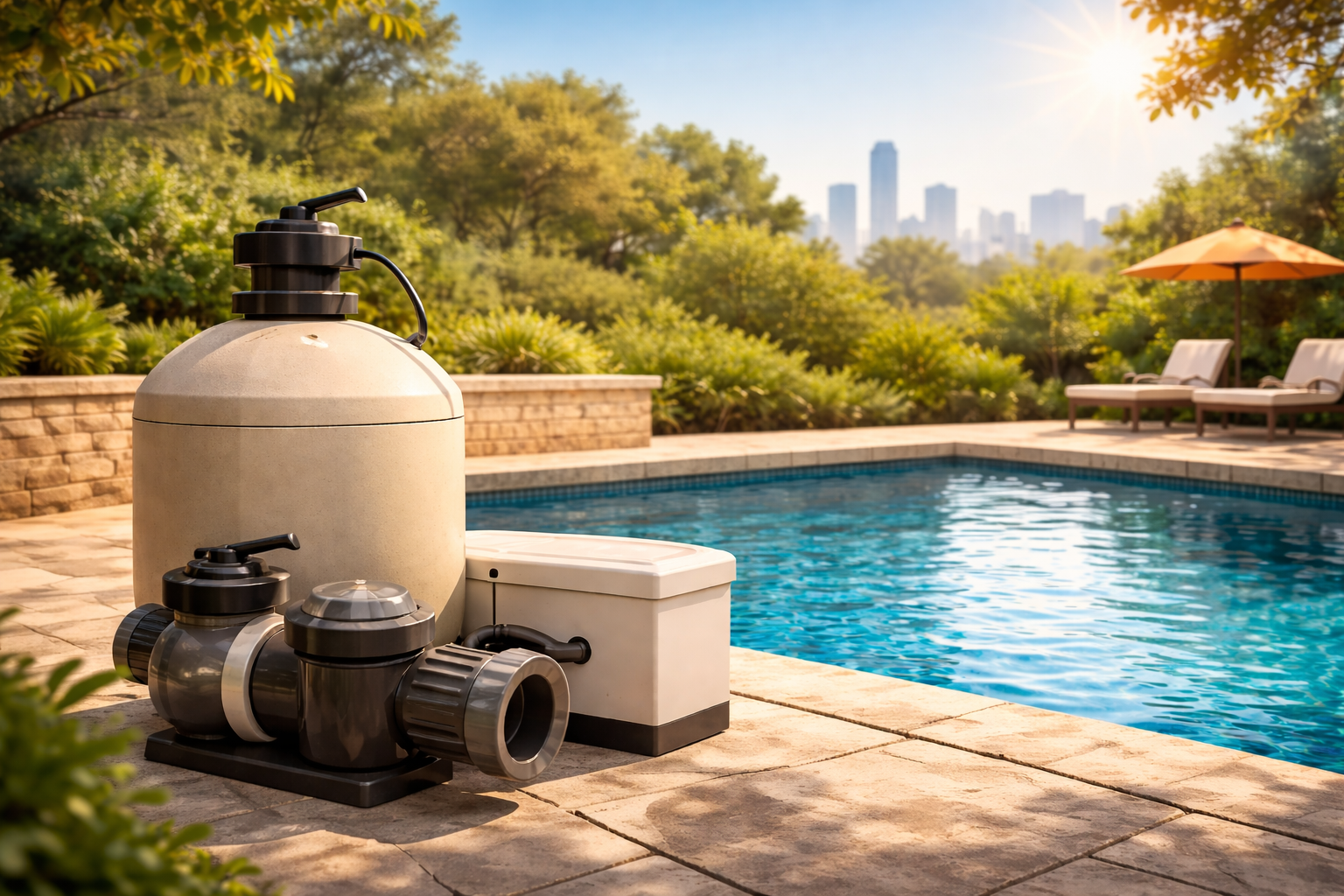
Know your equipment’s age. Buyers and inspectors will ask. Here’s what to expect on major components:
Equipment | Expected Lifespan | Replacement Cost (Installed) |
Variable-speed pump | 7 to 10 years | $700 to $1,500 |
Gas heater | 5 to 8 years | $2,000 to $4,000 |
Salt chlorinator cell | 3 to 5 years | $400 to $800 |
LED lighting | 5 to 7 years | $700 to $1,500 |
Plaster resurfacing | 10 to 15 years | $5,000 to $10,000+ |
If a major component is nearing end of life, you have two options: replace it proactively to remove a buyer objection, or disclose its age and adjust pricing expectations accordingly. For equipment that’s borderline, a professional assessment from a pool repair specialist can help you decide which direction makes more financial sense.
Cost-effective upgrades that tend to appeal to buyers include variable-speed pump installations (which save $400 to $800 annually in electricity), LED lighting conversions, and pool covers that reduce both evaporation and chemical consumption.
When to List a Pool Home in Texas
Spring through early summer is consistently the strongest window for Texas home sales, and it’s doubly advantageous for pool homes. Buyers are actively imagining summer use, the pool photographs at its best, and the surrounding landscaping is at its most appealing. Texas REALTORS® data shows May 2023 median home prices reached $354,100 and June hit $358,300, both above the annual median of $352,500.
Listing in winter isn’t impossible, but it requires more effort. If you’re selling off-season:
- Keep the pool clean and maintained year-round regardless of the listing timeline
- Include professional summer photographs in the listing to help buyers visualize warm-weather use
- Point out that Texas winters are mild enough for heated pool use through much of the season, with daytime highs averaging 59 to 62°F across most of the state in January
Frequently Asked Questions
Q: How much does a pool add to a Texas home’s value?
A: Depending on the market, between 5% and 10%. Austin sees some of the highest premiums nationally, with pools adding roughly $52,000 to home values on average according to Redfin’s analysis. San Antonio and Houston see meaningful but lower premiums.
Q: Do I have to disclose pool problems when selling in Texas?
A: Yes. Under Texas Property Code § 5.008, sellers must disclose known defects that materially affect the health, safety, or value of the property. This includes non-functioning equipment, safety hazards, and any work done without permits. Selling “as is” does not eliminate this obligation.
Q: Is a pool inspection required to sell a Texas home?
A: No. Pool inspections are optional under TREC standards. However, a pre-listing inspection is a practical tool for identifying and addressing issues before a buyer’s inspector finds them during the option period.
Q: Does a green or poorly maintained pool hurt the sale price?
A: It can. Visible algae, stains, or equipment problems reduce buyer confidence and give them concrete grounds to negotiate down. Bringing the pool into clean, functional condition before listing is worth the investment.
If you’re preparing to sell a home with a pool in the Austin or San Antonio area, contact Bluewater Pool Service. Our team holds CPO, CMS, CPI, RAIL, and OSHA certifications, we’ve maintained a BBB A-rating since March 2021, and we’re active members of the Pool & Hot Tub Alliance. We can handle everything from a pre-listing inspection to a full green-to-clean restoration, so the pool works in your favor when buyers walk through.