How to Keep Your Pool Cool in Texas
When summer temperatures push past 100°F, your pool water can climb into the low 90s or higher. At that point, jumping in feels less like relief and more like a warm bath. The good news: you can drop your pool temperature by 5–15°F using the right combination of shade, circulation, and cooling equipment.
Here at Bluewater, we commonly help cool pools throughout the Austin and San Antonio area. This guide covers seven practical methods Texas pool owners use to keep water in the comfortable 78–86°F range, along with real cost and performance data for each option.
Why Texas Pools Get So Hot
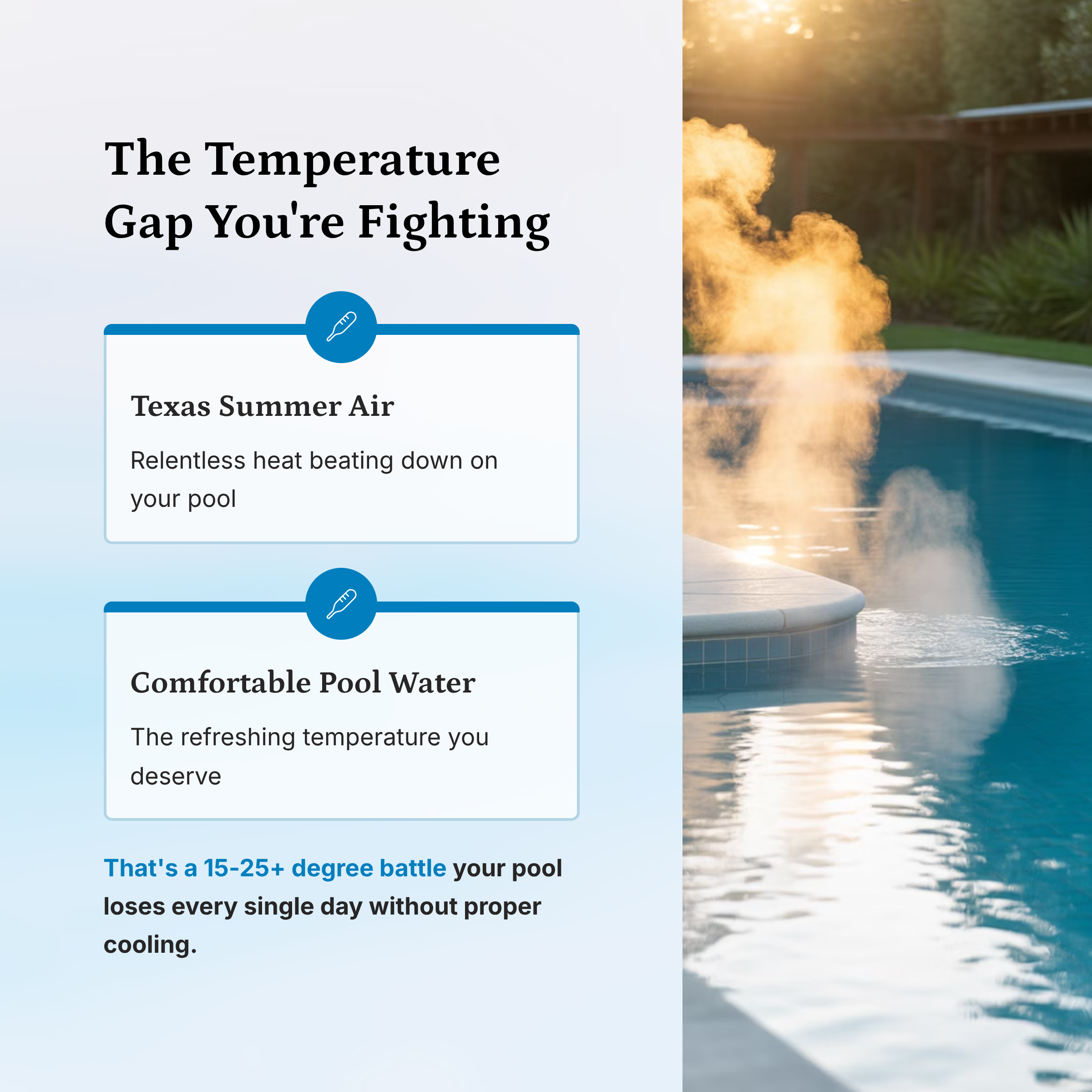
Texas summers routinely hit 100–104°F, with some regions seeing 110°F or more. Your pool absorbs solar radiation all day long, and without intervention, water temperatures can exceed 90°F by late afternoon.
Swimming in overheated water isn’t just uncomfortable. It creates several problems:
- Chlorine degrades faster in warm water, requiring more frequent chemical adjustments
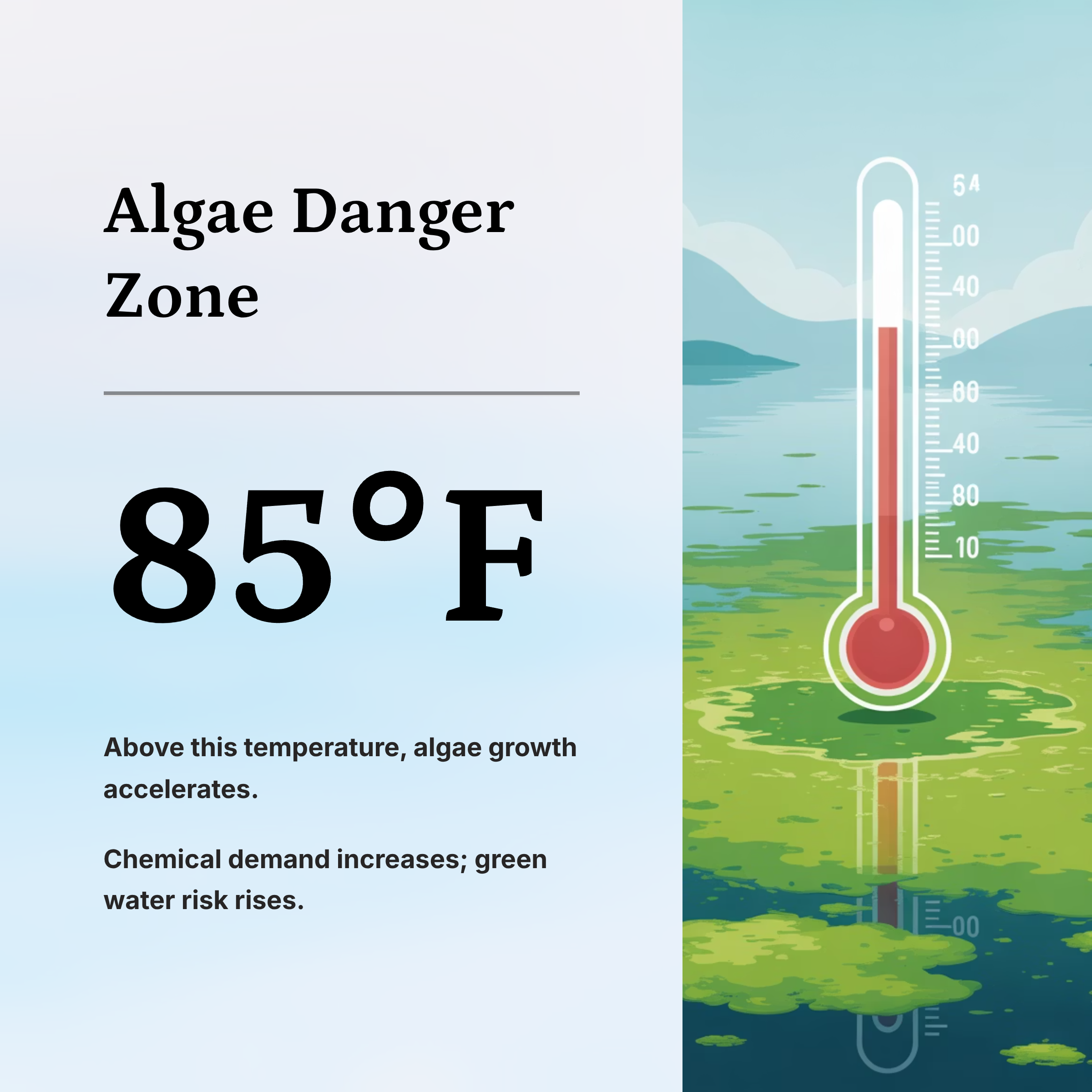
- Algae grows more aggressively above 85°F
- Your pool equipment works harder, shortening pump and filter lifespan
- The “cooling off” benefit of swimming disappears entirely
The comfortable swimming range sits between 78–86°F for most people.
Getting there in Texas heat requires active cooling strategies.
7 Ways to Cool Your Pool in Texas
1. Add Shade Over Your Pool
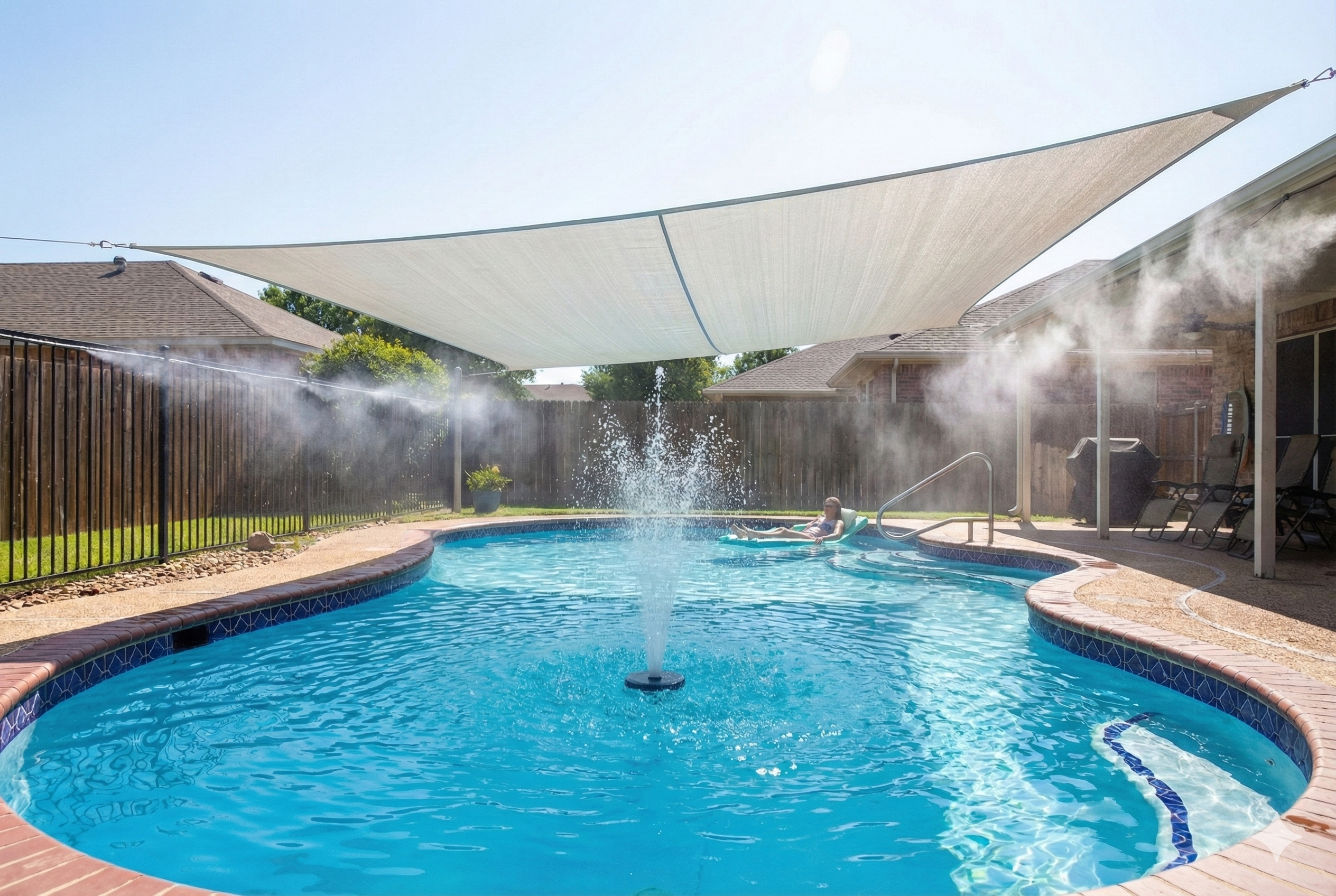
Blocking direct sunlight is the simplest and most cost-effective cooling method. Shade sails, pergolas, and strategically planted trees can reduce water temperature by 3–5°F while also protecting swimmers from UV exposure.
Shade does double duty for your pool chemistry. UV rays break down chlorine rapidly. When you block the sun, you reduce chlorine loss, saving money on chemicals and keeping your water balanced longer.
Best options for pool shade:
- Shade sails (most affordable, easy to install)
- Pergolas or covered patios
- Retractable awnings
- Trees planted on the west side of the pool (blocks late afternoon sun)
One thing to consider with trees: deciduous varieties will drop leaves in fall, creating more debris in your pool. Evergreens avoid this issue but take longer to grow.
2. Install Fountains or Water Features
Fountains, waterfalls, and aerator attachments cool water through evaporation. When water sprays into the air, it releases heat before falling back into the pool. This principle works the same way sweating cools your body.
Most water features lower pool temperature by 2–5°F. The effect is modest but adds up when combined with other methods.
Pro tip: Run fountains at night when ambient air is cooler. Nighttime operation amplifies the cooling effect because the sprayed water loses heat to cooler surrounding air instead of absorbing more from hot daytime temperatures.
The tradeoff with water features is increased evaporation. You’ll need to top off your pool more frequently, especially during dry, windy weather.
3. Run Your Pool Pump at Night
Switching your pump schedule to nighttime operation costs nothing extra and provides genuine cooling benefits. Circulating water through your filtration system during cooler overnight hours helps dissipate accumulated heat.
Some pool owners run water through their solar panels at night for additional cooling. During the day, solar panels heat water. At night, the same panels radiate stored heat away, cooling the water that passes through them.
This approach won’t drop temperatures dramatically on its own, but it’s free and supports other cooling methods you’re already using.
4. Use a Reflective Pool Cover
Not all pool covers work the same way. Standard blue “solar covers” trap heat and warm your pool. Reflective covers designed for hot climates do the opposite.
Products like GeoBubble’s CoolGuard reflect sunlight and prevent solar heating. In testing, reflective covers kept pool water below 90°F even when air temperatures exceeded 110°F.
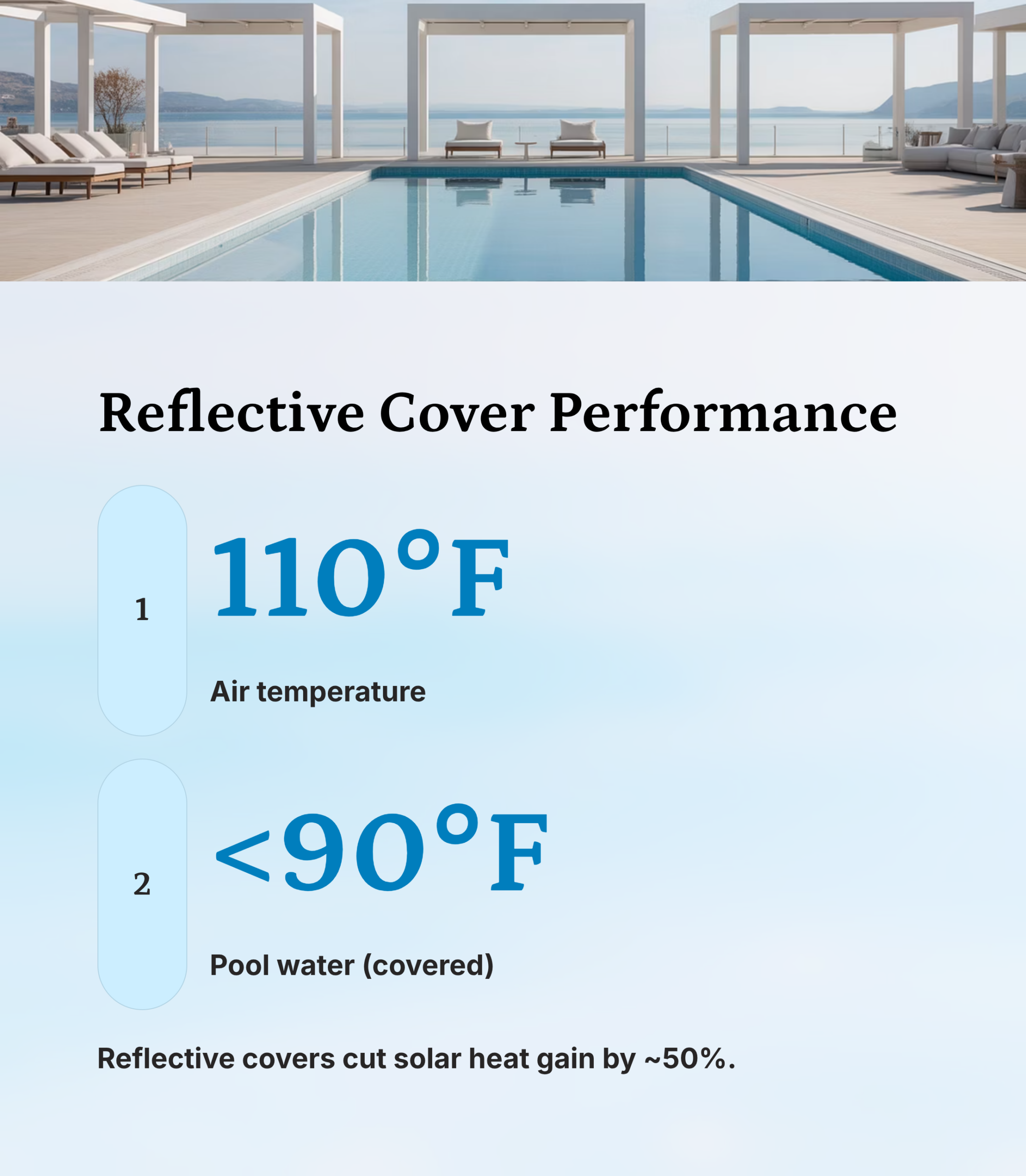
These covers can cut solar heat gain by roughly 50%.
The strategy for reflective covers:
- Cover the pool during the day to block solar heating
- Remove the cover at night to let cooler air pull heat from the water
- Repeat daily until water stabilizes at your target temperature
Reflective covers also reduce evaporation by up to 98%, which means less water loss and fewer chemical adjustments. They require no electricity and last for years with proper care.
5. Install an Evaporative Pool Cooler
Evaporative coolers (sometimes called “swamp coolers” for pools) use fans and misters to accelerate evaporation across a larger surface area. They’re more powerful than simple fountains but less expensive than mechanical chillers.
Typical performance: 5–10°F temperature drop
Typical cost: $5,000–$7,000 installed
Evaporative coolers work best in dry climates. Texas humidity varies significantly by region. In the Hill Country or West Texas, these units perform well. In humid areas near the Gulf Coast, effectiveness drops because saturated air can’t absorb as much moisture.
One limitation: evaporative coolers can only cool water. If you also need to heat your pool in winter, you’ll need separate equipment.
6. Invest in a Pool Chiller
Pool chillers are the most powerful cooling option. They work like air conditioners, using refrigeration cycles to extract heat from water. Many units are reversible heat pumps, meaning they can warm your pool in winter and cool it in summer.
Typical performance: 8–10°F temperature drop
Typical cost: $5,000–$10,000+ installed
Chillers require a dedicated 50-amp electrical circuit and consume significant power during operation. They’re the right choice when other methods aren’t sufficient or when you need precise temperature control regardless of weather conditions.
For most Texas homeowners, a chiller makes sense if you swim frequently, have a large pool, or live in an area where temperatures regularly exceed 105°F for extended periods.
7. Partial Drain and Refill
When you need fast results, draining some warm water and refilling with cold well water or municipal water can drop temperatures quickly. Well water in Texas often comes out of the ground at 65–70°F, providing immediate relief.
This method has two significant drawbacks:
- It wastes water during drought-prone Texas summers
- Fresh water requires complete chemical rebalancing (pH, alkalinity, chlorine, and stabilizer)
Use this as an occasional quick fix rather than a regular strategy. It’s most practical after extended heat waves when other cooling methods haven’t kept up.
Pool Cooling Methods Compared
Method | Temperature Drop | Cost | Best For |
Shade structures | 3–5°F | $200–$2,000 | All pools; also protects swimmers and reduces chemical loss |
Fountains/aerators | 2–5°F | $100–$500 | Budget-friendly option; run at night for best results |
Nighttime pump operation | 1–3°F | Free | Everyone; combine with other methods |
Reflective pool cover | 5–15°F vs. uncovered | $200–$600 | Serious cooling without ongoing energy costs |
Evaporative cooler | 5–10°F | $5,000–$7,000 | Dry climates; moderate budgets |
Pool chiller | 8–10°F | $5,000–$10,000+ | Large pools; precise temperature control; frequent swimmers |
Drain and refill | Varies | Water cost only | Emergency cooling; occasional use |
Does Adding Ice to Your Pool Work?
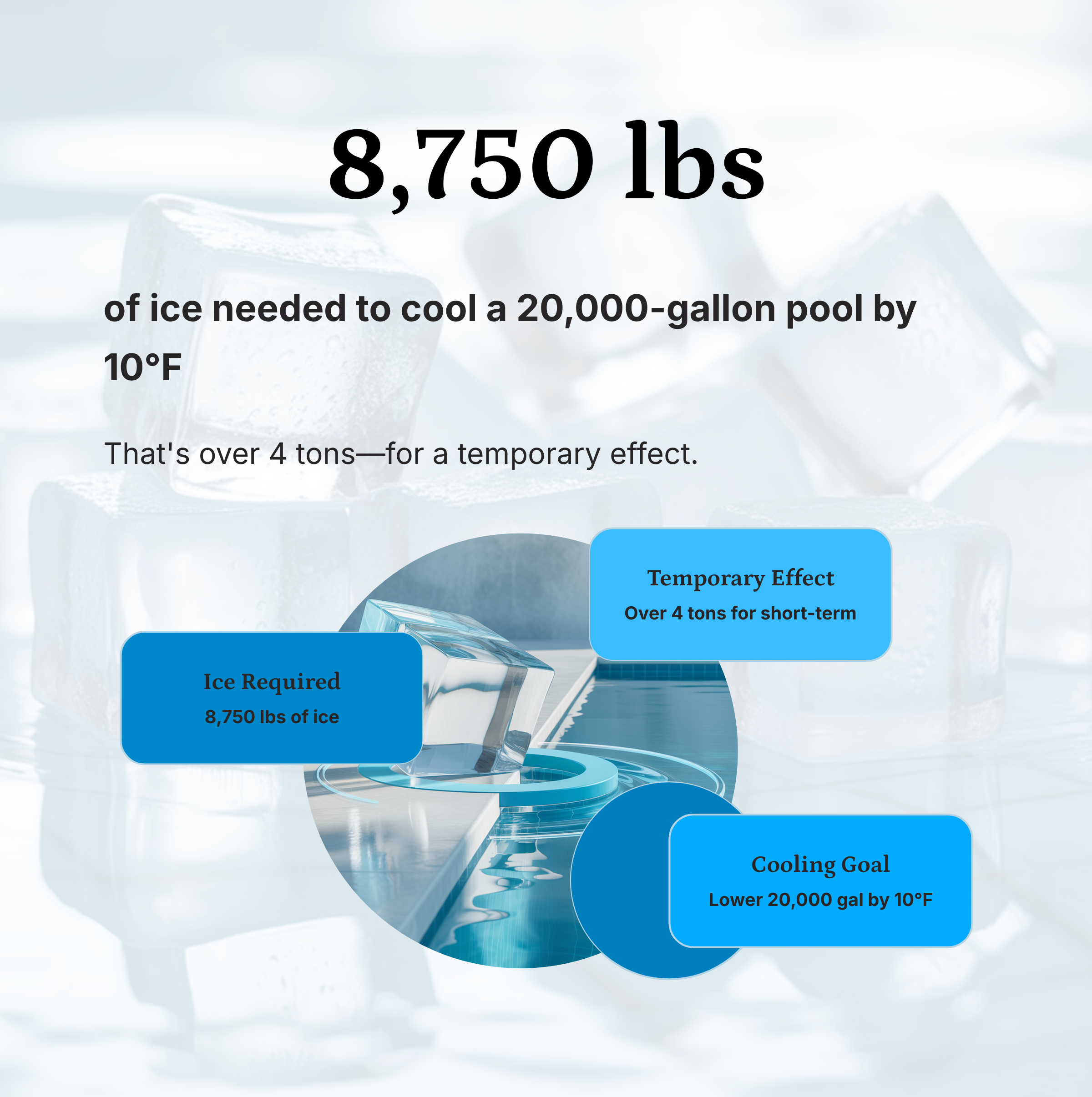
It sounds logical, but ice is wildly impractical for pool cooling. Research shows it would take approximately 8,750 pounds of ice to lower a 20,000-gallon pool by just 10°F. That’s over four tons of ice for a temporary effect that would reverse within hours.
Skip the ice and invest in methods that provide sustained cooling.
How Heat Affects Pool Chemistry
Water temperature directly impacts your pool’s chemical balance. Understanding this relationship helps you maintain safe, comfortable water during Texas summers.
Chlorine loss accelerates in heat. Chlorine breaks down faster in warm water and under intense UV exposure. During peak summer, you may need to test and adjust chlorine levels more frequently than your normal pool maintenance schedule.
Algae thrives in warm water. Temperatures above 85°F create ideal conditions for algae growth.
Combining proper chemical balance with active cooling helps prevent green water problems.
pH tends to rise. Warmer water releases carbon dioxide more readily, which pushes pH upward. Monitor pH weekly during hot weather and adjust as needed.
If you’re running fountains or water features for cooling, keep in mind that aeration also raises pH. This isn’t a problem as long as you’re testing regularly and making corrections.
Combining Methods for Best Results
No single cooling method solves Texas heat on its own. The most effective approach combines multiple strategies:
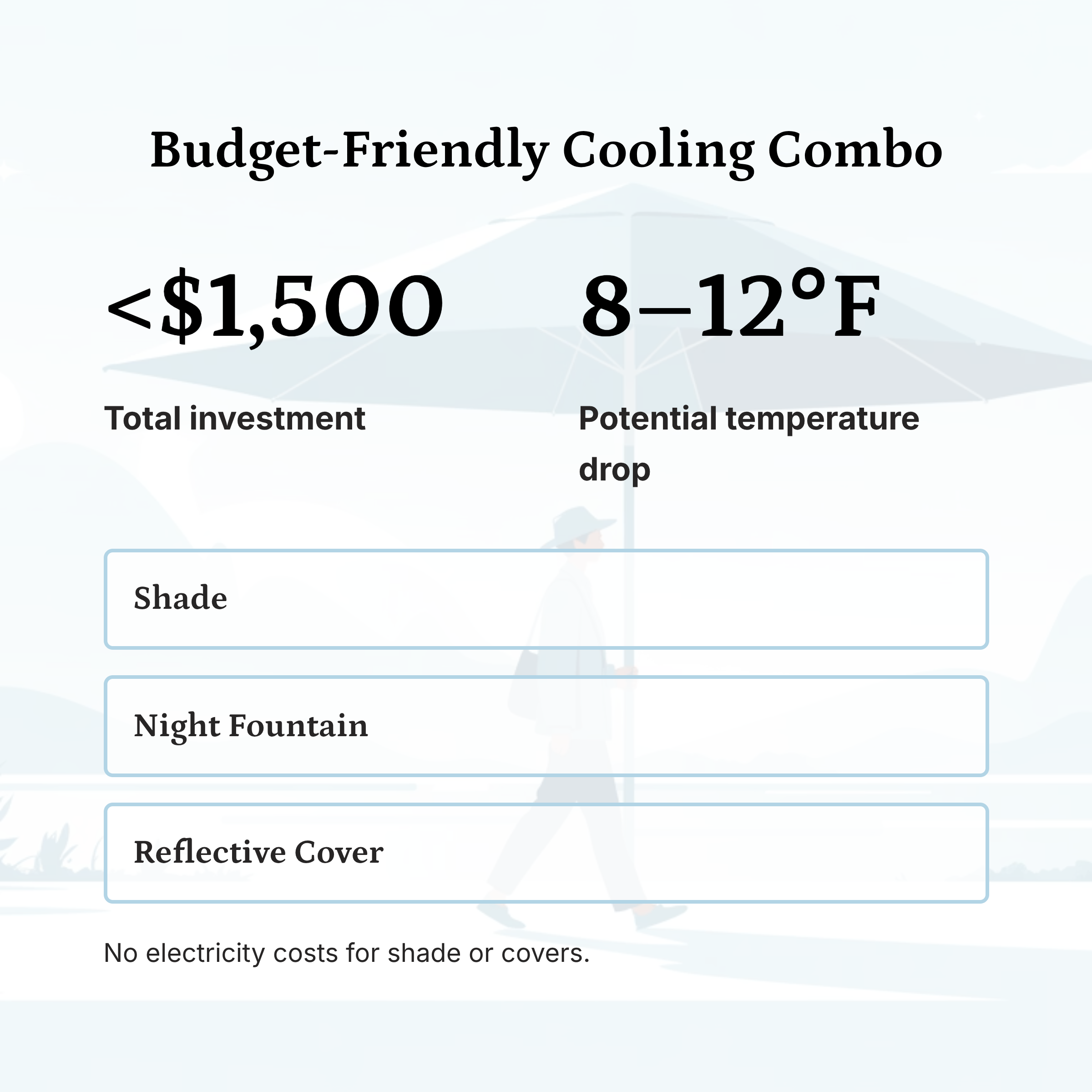
Budget-friendly combination: Shade structure + fountain running at night + reflective cover during the day. Total investment under $1,500 with potential temperature reduction of 8–12°F.
Maximum cooling setup: Shade structure + pool chiller + reflective cover + nighttime pump operation. This combination can maintain comfortable temperatures even during 110°F heat waves.
At Bluewater Pools, we’ve seen plenty of Texas pools struggle through July and August. The owners who stay comfortable are almost always using at least two or three of these methods together.
Keep Your Pool Comfortable All Summer
Managing pool temperature is part of the larger picture of pool care in Texas. Heat affects everything from chemical balance to equipment performance to how much you actually enjoy your pool.
Whether you handle maintenance yourself or work with a service provider, understanding these cooling strategies helps you make informed decisions about your pool.
If you’re in the San Antonio or Austin area and want help keeping your pool in peak condition through Texas summers, Bluewater Pools offers weekly pool cleaning services that include water chemistry management, equipment checks, and guidance on keeping your water refreshing when temperatures climb. Reach out to schedule an assessment of your pool.