Winterizing Your Pool: Complete Guide for 2026
Winterizing your pool means preparing it for cold weather by balancing chemicals, draining equipment, and covering the water. This process prevents freeze damage that can crack pipes, filters, and pool walls. When water freezes, it expands about 9-10%, which can cause thousands of dollars in repairs if your pool isn’t properly protected.
At Bluewater pools, we have extensive experience winterizing pools in Austin and San Antonio, Texas. The specific steps depend on your climate, but all pool owners should take precautions before freezing temperatures arrive.
Why Winterizing Your Pool Matters
Proper winterization protects your pool investment from expensive damage. Water left in pipes, pumps, and filters can freeze and expand, cracking equipment and plumbing. Many homeowners’ insurance policies won’t cover freeze damage if it results from negligence or lack of maintenance.
Pool owners who skip winterization often face green, stained water in spring. Organic debris that sits in the pool all winter decays and leaves stubborn marks on liners and surfaces. Proper closing prevents these issues and makes spring opening much simpler.
The cost of repairs from inadequate winterization can reach tens of thousands of dollars. Cracked underground pipes, damaged pumps, broken filters, and structural damage to pool walls all result from water freezing where it shouldn’t. Many homeowners’ insurance policies won’t cover freeze damage deemed the result of negligence or lack of maintenance. Spending time on proper winterization now saves money and frustration later.
When Should You Winterize Your Pool?
Wait until your water temperature stays consistently below 60°F before winterizing. Closing too early, while the water is still warm, creates ideal conditions for algae growth under the cover. Algae and microorganisms stay dormant in cold water, making your winterizing chemicals more effective.
Never wait until after the first hard freeze. Winterize before overnight temperatures regularly drop below 32°F. In most temperate regions, this means closing the pool in mid to late fall, typically October or early November.
Your local climate determines your winterization timeline:
Northern states: Full winterization required by late October
Transition zones: Mid-November closing, with freeze protection measures
Southern states like Texas: Minimal winterization or freeze guard operation throughout winter
Cold Climate vs. Mild Climate: Different Approaches
The winterization process varies significantly based on how often your area experiences freezing temperatures. Here’s how approaches differ:
Winterization Aspect | Cold Climate (Deep Winter) | Mild Climate (Texas) |
Freeze Frequency | Sustained hard freezes throughout winter | Infrequent freezes (approximately 11 nights below 32°F per year in cities like Houston and Austin) |
Closing Approach | Fully close pool for winter: shut down all equipment, lower water level substantially, blow out all plumbing lines, add antifreeze to pipes | Often no full closing: pool remains operational with minimal prep. Lower water slightly and open drain plugs, but typically no extensive blow-outs |
Plumbing Protection | All plumbing blown out with air compressor; antifreeze added to lines. Equipment (pump, filter, heater) completely drained and shut down | No line blow-outs or antifreeze typically needed. Use freeze guard switch to run pump during cold snaps so water keeps moving through pipes. Drain plugs removed from equipment |
Pool Cover | Sturdy winter cover or safety cover installed to keep debris out and block sunlight. Prevents leaves from staining water | Cover often optional. Some owners leave pools uncovered or use lighter covers. If covered, might still check or use pool occasionally |
Off-Season Maintenance | Pool essentially dormant for winter. Periodically clear snow/leaves off cover and monitor water level every few weeks. No routine circulation until spring | Active monitoring continues on reduced schedule. Water chemistry checked monthly. Pump runs during freezes and perhaps a few hours weekly |
In Texas and other mild winter regions, we take a different approach than northern pool owners. Rather than a complete shutdown, most Texas pools stay partially operational. We lower the water level to the bottom of the tile line, pull all drain plugs on equipment, and rely on freeze guards to protect pipes during occasional cold snaps.
A freeze guard is a temperature sensor that automatically turns on your pump when air temperature nears freezing. Running water won’t freeze in pipes, so this simple device prevents damage during Texas’s brief cold periods. Many Texas pool owners leave their pools uncovered or lightly covered, checking them monthly rather than sealing them away for months.
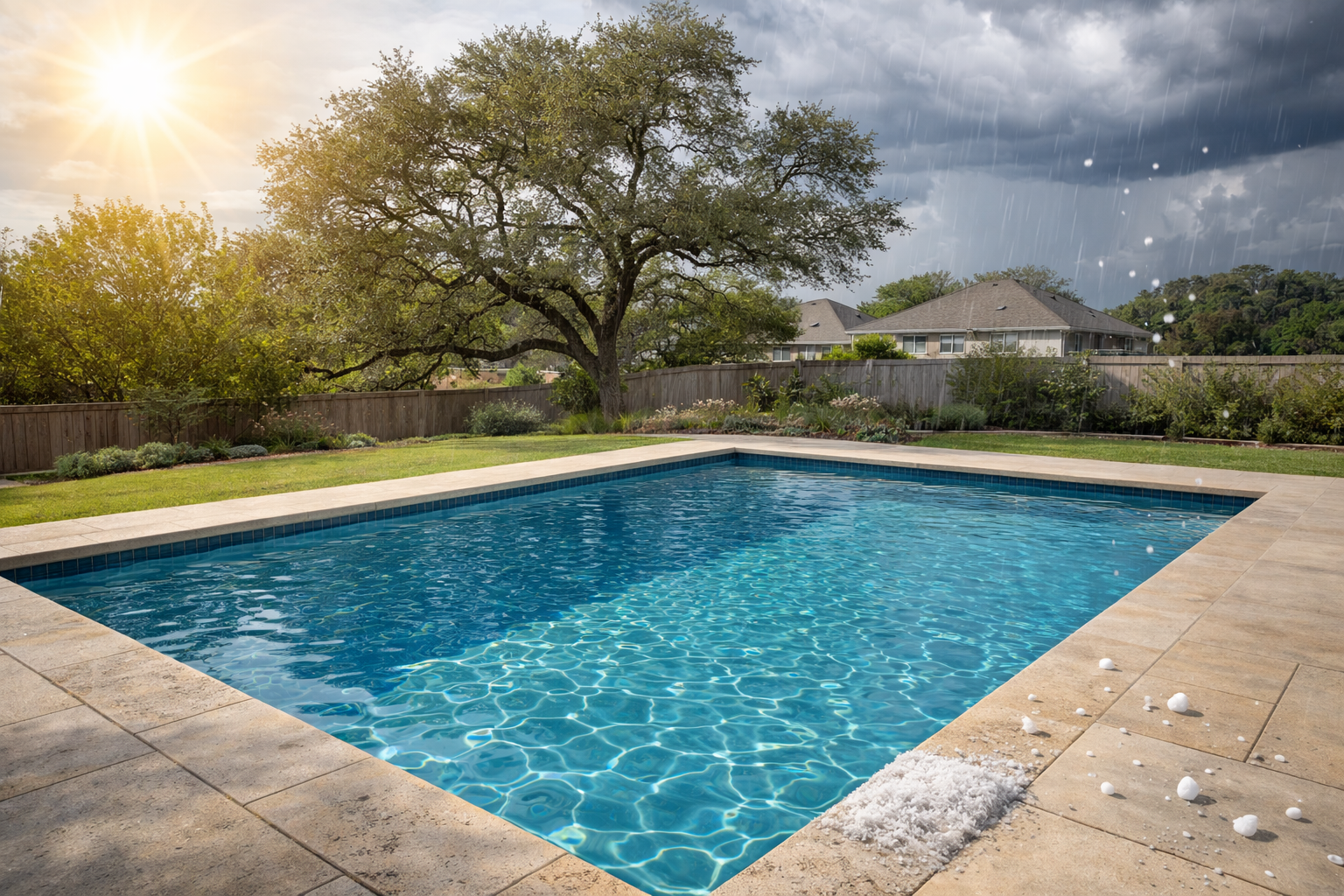
However, even mild climate areas need precautions. The extreme Texas cold snap of 2021 caught many pool owners unprepared. Cities like Houston and Austin typically see temperatures below 32°F only about 11 nights per year, but one night of ice buildup can damage your pool.
How to Winterize Your Pool (8 Essential Steps)
For pool owners in cold climates, or those who choose to fully close their pool, follow these steps:
1. Clean Your Pool Thoroughly
Start with a complete deep cleaning. Skim all leaves and debris from the surface, vacuum the pool floor, and brush walls and steps to remove algae or dirt. Empty skimmer and pump baskets.
Remove all accessories before covering. Take out ladders, steps, toys, pool cleaners, and any removable equipment. Clean these items and store them for winter. Leaving items installed can cause damage from freezing and makes covering more difficult.
Organic debris left in the pool will decay over winter, causing stains and poor water quality in spring. This cleaning step directly impacts how easily your pool opens next season.
2. Balance the Water Chemistry
Test and adjust your water chemistry before closing. Target these ranges:
- pH: 7.2-7.6
- Total alkalinity: 80-120 ppm
- Calcium hardness: 180-220 ppm
Properly balanced water prevents corrosion, scale, and stains during winter storage. Acidic water can deteriorate pool surfaces and equipment seals over months of sitting. Alkaline water leaves scale deposits. Take time to get the balance right.
3. Shock and Add Winterizing Chemicals
Add chlorine shock to kill remaining bacteria and algae spores. Run your pump to circulate the shock throughout the pool. Let chlorine levels return to normal (1-3 ppm) before adding other chemicals.
Next, add winter algaecide to prevent algae growth during stagnant winter months. Use a non-copper polymer algaecide formulated for winter to avoid staining. Proper winterizing prevents the green pool conditions that many owners face in spring. Many pool owners purchase winterizing chemical kits that include shock, algaecide, and metal sequestrant in one package.
Run your pump for several hours after adding all chemicals to ensure complete distribution throughout the water.
4. Lower the Water Level
Drain your pool to just below the skimmer mouth and tile line. This prevents water from entering the skimmer during winter. Water that sits in the skimmer and freezes can crack the skimmer plastic.
Never drain an in-ground pool completely. Pools need some water to avoid structural damage. Empty pools can pop out of the ground or suffer liner issues.
For above-ground pools, lower water a few inches below the skimmer opening. The liner needs water support, so don’t drain more than necessary.
If you use a vinyl safety cover, check manufacturer guidelines on water level. Most recommend no more than 12-18 inches below the coping.
5. Drain and Protect Equipment
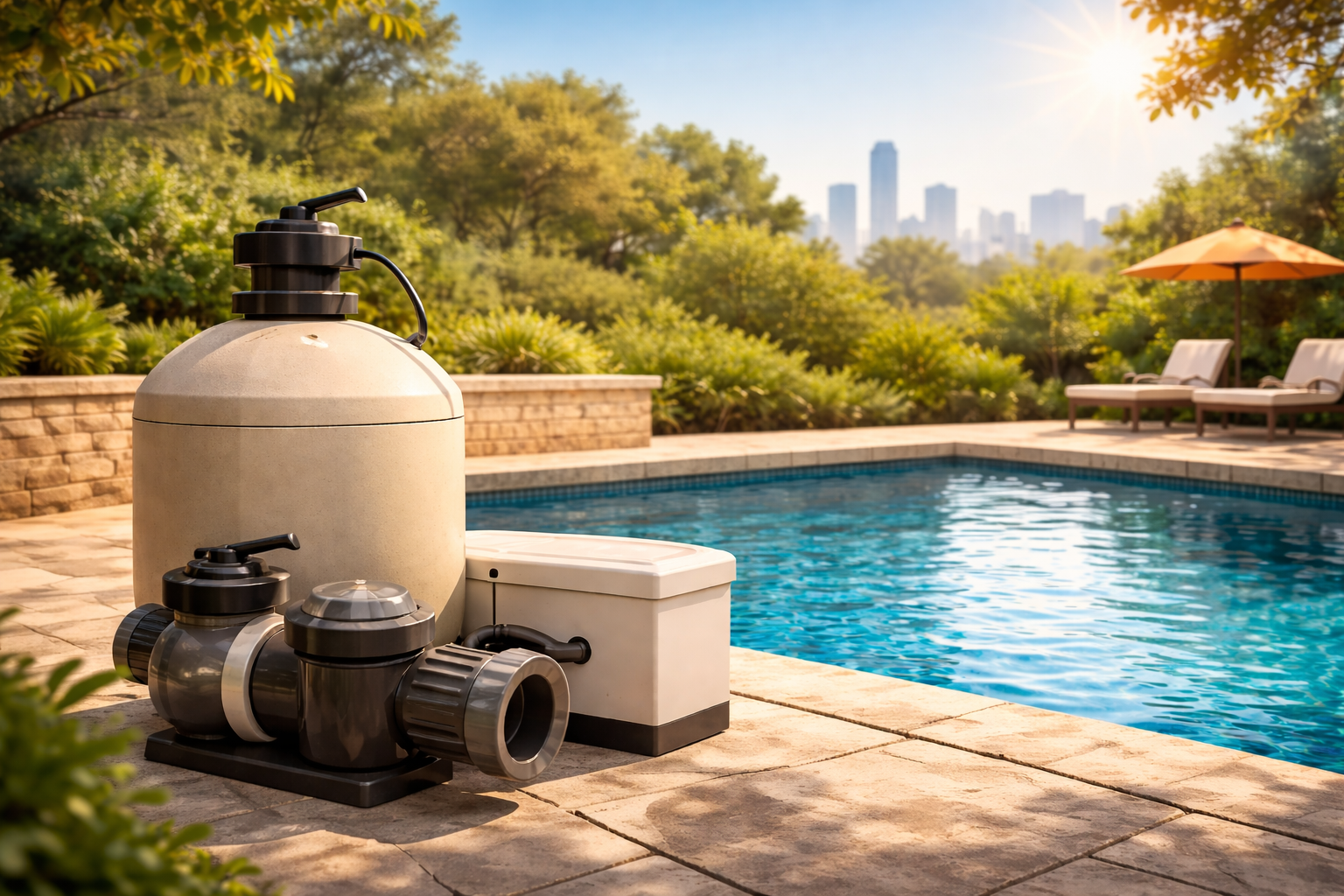
Open all drain plugs on your pump, filter, and heater to release water. Most equipment has drain plugs at low points. Open the filter’s air relief valve as well. Skipping this step leads to costly equipment repairs when components crack from ice expansion.
For DE or cartridge filters, disassemble and rinse the grids or cartridges. Store these components indoors. Sand filters just need the tank drained.
Blow out plumbing lines using a shop vacuum in blower mode or an air compressor. Push air through each line (from pump through returns and skimmer) to remove nearly all water from underground pipes. Once a line is blown out, plug each return jet with a winterizing plug to keep water out.
Place a Gizzmo (freeze expansion plug) in the skimmer. This hollow plug absorbs ice expansion and prevents the skimmer from cracking.
Keep all drain plugs together for spring. Many people store them in the pump strainer basket so they’re easy to find when reopening.
6. Add Pool Antifreeze (If Needed)
If you’ve properly blown out lines and plugged them, antifreeze is optional. Many professionals skip it when no water remains in lines.
In extremely cold climates, pour non-toxic pool antifreeze (propylene glycol based) into skimmer and return lines after blowing them out. This protects any small pockets of remaining water. Use 1-2 gallons per skimmer line.
Never use automotive antifreeze in pools. Only use pool-specific antifreeze.
In mild climates like Texas, antifreeze typically isn’t needed if you’re using a freeze guard system to run the pump during cold snaps.
7. Cover Your Pool Securely
Install your winter cover once all other steps are complete. A quality cover keeps debris out, blocks sunlight that encourages algae, and provides safety.
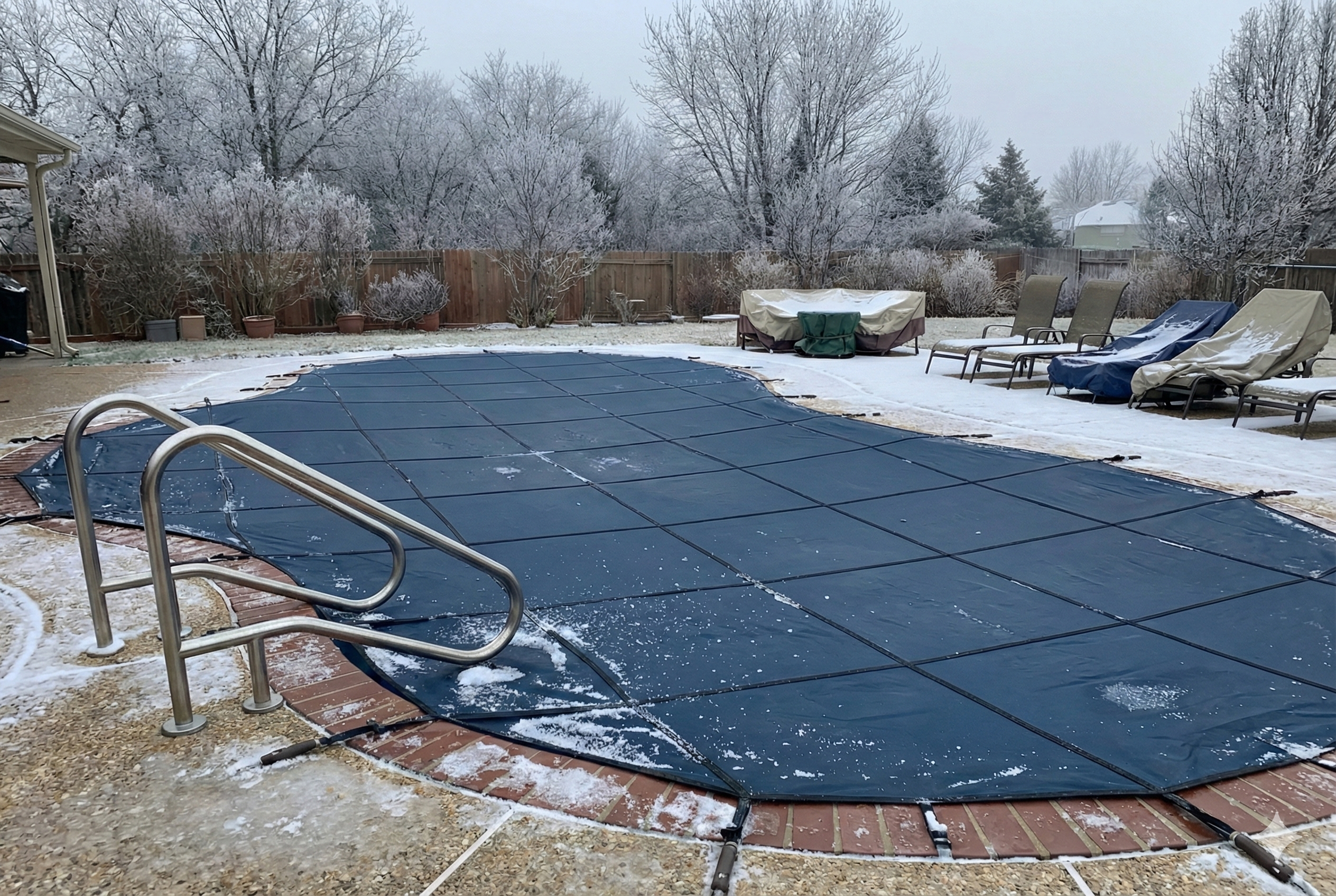
For in-ground pools, use either a solid tarp-style winter cover secured with water bags or an anchored safety cover that straps tightly across the deck. Make sure the cover has no holes and secure it tightly so wind can’t blow it loose.
If using water bag weights, fill them only 3/4 full. This allows room for expansion if they freeze, preventing them from bursting.
For above-ground pools, use an air pillow (ice compensator) under the cover. This inflatable pillow sits in the pool’s center and absorbs pressure from ice expansion, protecting pool walls from damage. The pillow also prevents a solid ice sheet from forming across the entire pool surface.
Secure the cover tightly around the perimeter using cable, winch, or clips. A loose cover can sag into the water or tear under wind stress.
8. Monitor Throughout Winter
Check your covered pool every few weeks throughout winter. Remove excessive leaves or debris that accumulate on the cover. Use a cover pump to remove rainwater or melted snow.
In snowy climates, gently clear heavy snow off the cover to avoid overstressing it. Test water chemistry once monthly if possible and adjust if something has drifted.
Ensure the water level hasn’t dropped significantly, which might indicate a leak. Keeping an eye on things makes spring opening easier.
Common Winterization Mistakes
Avoid these frequent errors:
Closing too early: Warm water (above 60°F) encourages algae growth under the cover. Wait until water cools consistently before winterizing.
Skipping water chemistry: Unbalanced or dirty water causes swamp-like conditions by spring. Always clean, balance, and shock before covering.
Leaving water in equipment: Water left in pumps, filters, or pipes will freeze and crack. Drain everything completely or use freeze protection.
Poorly secured covers: Loose covers blow open, allowing debris in and creating safety hazards. Secure covers properly with no gaps.
Ignoring the pool all winter: Check periodically for cover condition, water level, and remove heavy snow or leaf loads.
Above-Ground Pool Considerations
Above-ground pools need special attention during winterization:
Protect walls and liner: Always use an air pillow under the cover to absorb ice expansion. Without a pillow, ice can push outward and damage walls or stretch the liner.
Store equipment indoors: Many above-ground pool owners disconnect the pump and filter and store them in a shed or garage to protect from freezing. After draining equipment, remove hoses and keep everything dry.
Secure the cover: High winds can get under above-ground pool covers more easily. Use a cable and winch to cinch the cover tight around the pool. The air pillow should center the cover so rain runs off toward the edges.
Keep people off: Once winterized and covered, keep everyone off the pool. Covers won’t support weight unless specifically designed as safety covers.
Should You Hire a Professional Pool Service?
Professional pool winterization costs approximately $150-300, depending on pool size and complexity. This relatively small investment protects a pool worth tens of thousands of dollars.
Consider hiring professionals if you have:
- In-ground pool with complex plumbing
- Multiple pumps or water features
- Spa or attached equipment
- First-time pool ownership with limited experience
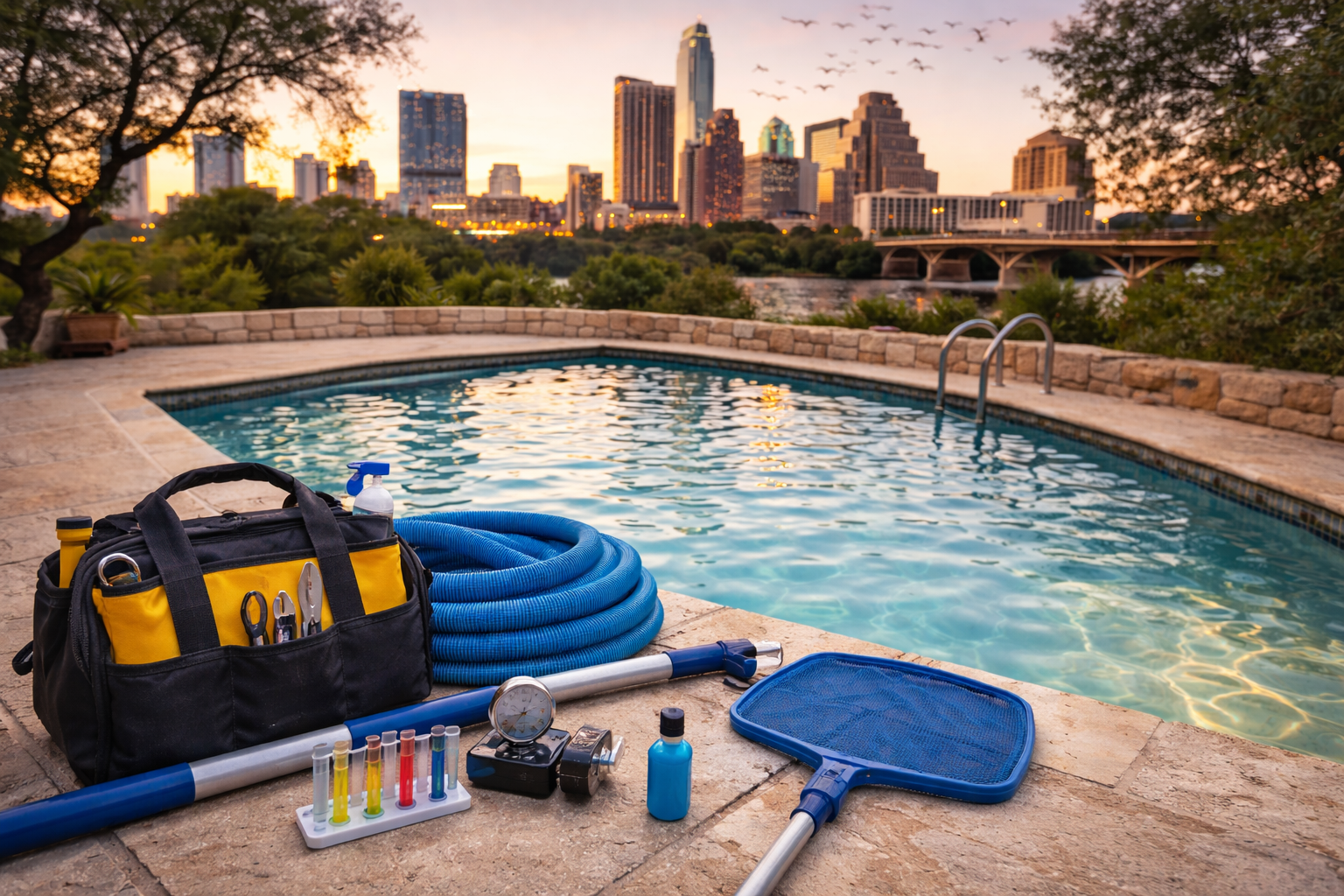
Professional technicians have specialized tools like high-powered air compressors for blowing lines. They complete the job faster and more thoroughly than most homeowners. If something goes wrong with professional service, reputable companies stand behind their work.
At Bluewater Pools, we handle seasonal tasks like winterizing and spring opening throughout San Antonio and Austin. We understand the unique requirements of Texas pool maintenance, including when to use freeze guards versus full winterization. Our CPO-certified technicians ensure every step protects your pool properly.
Whether you choose DIY or professional winterization, proper preparation prevents freeze damage and makes spring startup smooth and hassle-free.
Protect Your Pool This Winter
Winterizing your pool properly prevents thousands of dollars in freeze damage and ensures clear, ready-to-swim water when warm weather returns. While the process requires time and attention, the investment protects your pool for decades of enjoyment.
If you’re in the San Antonio or Austin area and want professional winterization service, contact Bluewater Pools. Our certified technicians handle everything from chemical balancing to equipment protection, giving you peace of mind throughout winter.