How to Choose a Pool Service Company in Texas: 2026 Guide
Choosing a pool service company in Texas requires verifying credentials, checking insurance coverage, and confirming technical expertise. Start by ensuring the company is properly licensed and insured, check reviews across multiple platforms, compare service offerings, and ask specific questions about their experience and approach to pool maintenance.
Quick Checklist: What to Look For
- Valid Texas state license (verify at tdlr.texas.gov)
- Current liability insurance
- Professional certifications in pool operations
- Positive reviews across Google, Yelp, and BBB
- Clear written service agreement
- Dedicated technician assigned to your pool
- Reasonable response time to inquiries
Verify Licensing and Insurance
Texas Licensing Requirements
Texas requires specific licenses for pool equipment work through the Texas Department of Licensing & Regulation (TDLR). Any company performing repairs or installations must have properly licensed technicians.
For your reference, the relevant licenses include:
- Residential Appliance Installer (RAIL): Covers residential pool equipment installation
- Residential Appliance Installation Contractor (RAIC): Required for contracting work
You don’t need to memorize these acronyms or ask for them specifically. Simply request their license information and verify it through the TDLR online database. Working with unlicensed contractors can void equipment warranties and leave you without legal recourse if problems arise.
Insurance Coverage
Request proof of current liability insurance before signing any agreement. This protects you if accidents or property damage occur during service. Ask to see their certificate of insurance and verify it’s current. A legitimate company provides documentation immediately.
Check Experience and Certifications
Local Experience
Look for companies with established experience in your area. Pool maintenance in Texas differs from other regions due to intense heat, high evaporation, and long swimming season. Ask how long they’ve operated in your area and how many pools they currently service.
Professional Certifications
Beyond state licensing, look for professional certifications that demonstrate advanced knowledge:
Certified Pool Operator (CPO): This is the industry’s gold standard certification. The program covers water chemistry, chemical safety, pool operations, and maintenance procedures. Completion requires passing a comprehensive exam administered by the Pool & Hot Tub Alliance.
Pool & Hot Tub Alliance Membership: Companies that are active members have access to ongoing education, industry updates, and training programs. Membership indicates commitment to staying current with best practices.
When talking to companies, you don’t need to ask “Are you CPO certified?” Instead, simply ask: “What professional certifications do your technicians hold?” Their answer will reveal whether they’ve invested in proper training.
Research Reputation
Where to Check
Research companies across Google Business Profile, Yelp, Better Business Bureau, Facebook, and Nextdoor. Look for patterns – multiple complaints about the same issue signal real problems.
What to Look For in Reviews
Positive indicators include consistent praise for reliability, mentions of specific technicians, long-term customer relationships, and responsive problem resolution. Warning signs include multiple complaints about missed appointments, chemical imbalance issues, or difficulty reaching the company.
Ask for References
Request contact information for 3-5 current customers. When calling, ask how long they’ve used the service, how problems were handled, whether their technician is knowledgeable, and if they’d hire the company again.
Compare Services and Capabilities
Standard Maintenance Services
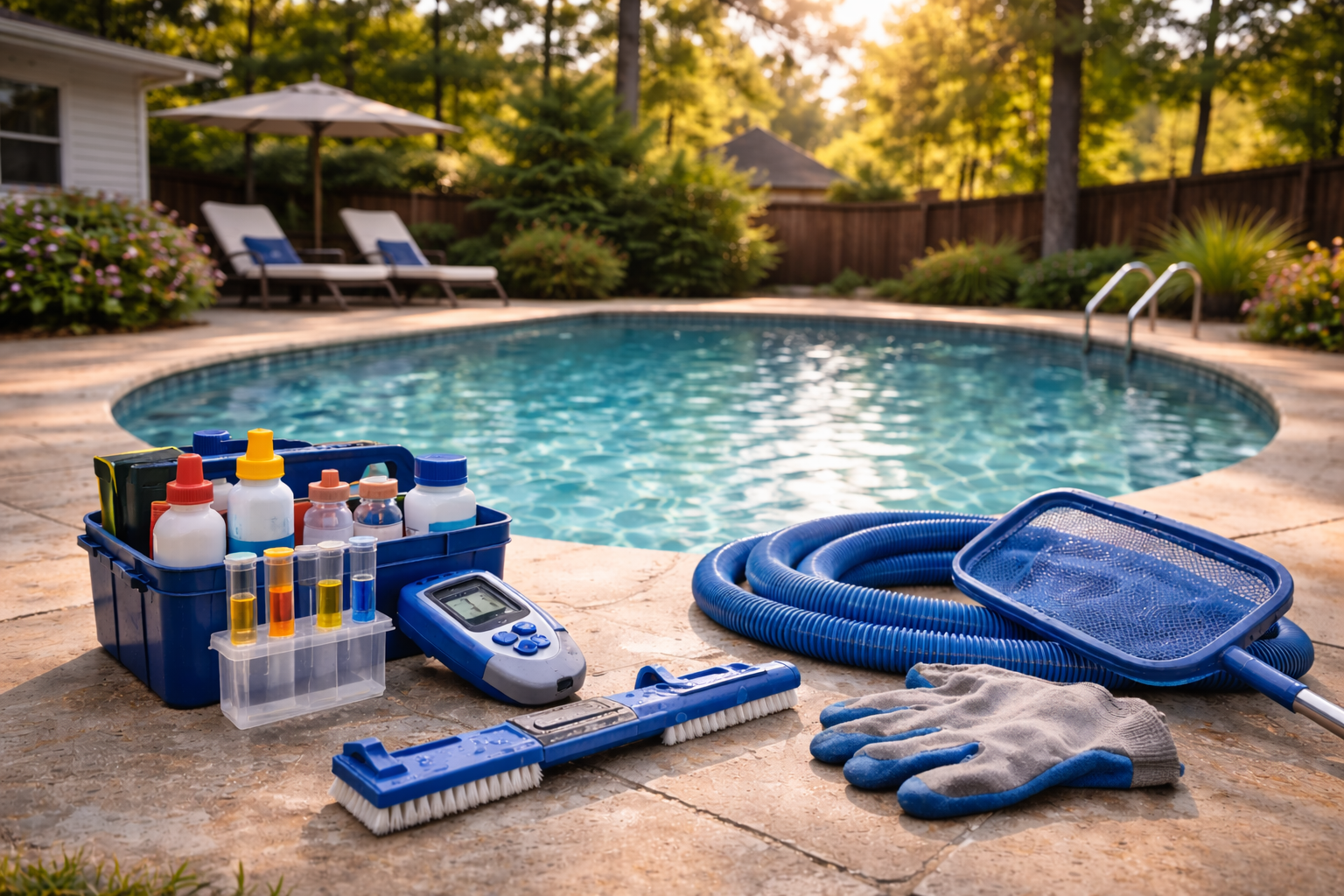
Basic pool cleaning services should include:
- Skimming surface debris
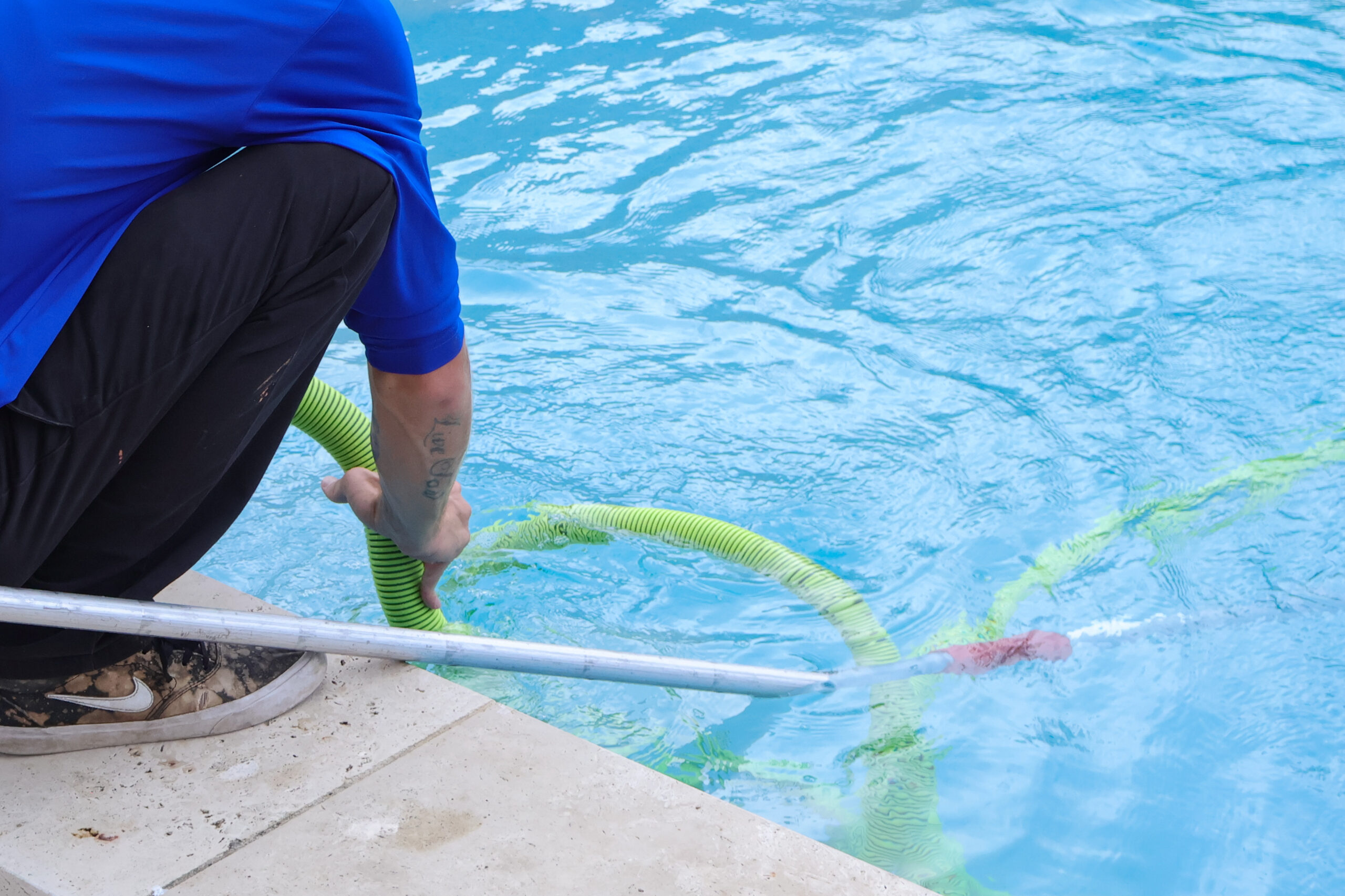
- Vacuuming pool floor
- Brushing walls and steps
- Emptying skimmer and pump baskets
- Water testing and chemical balancing
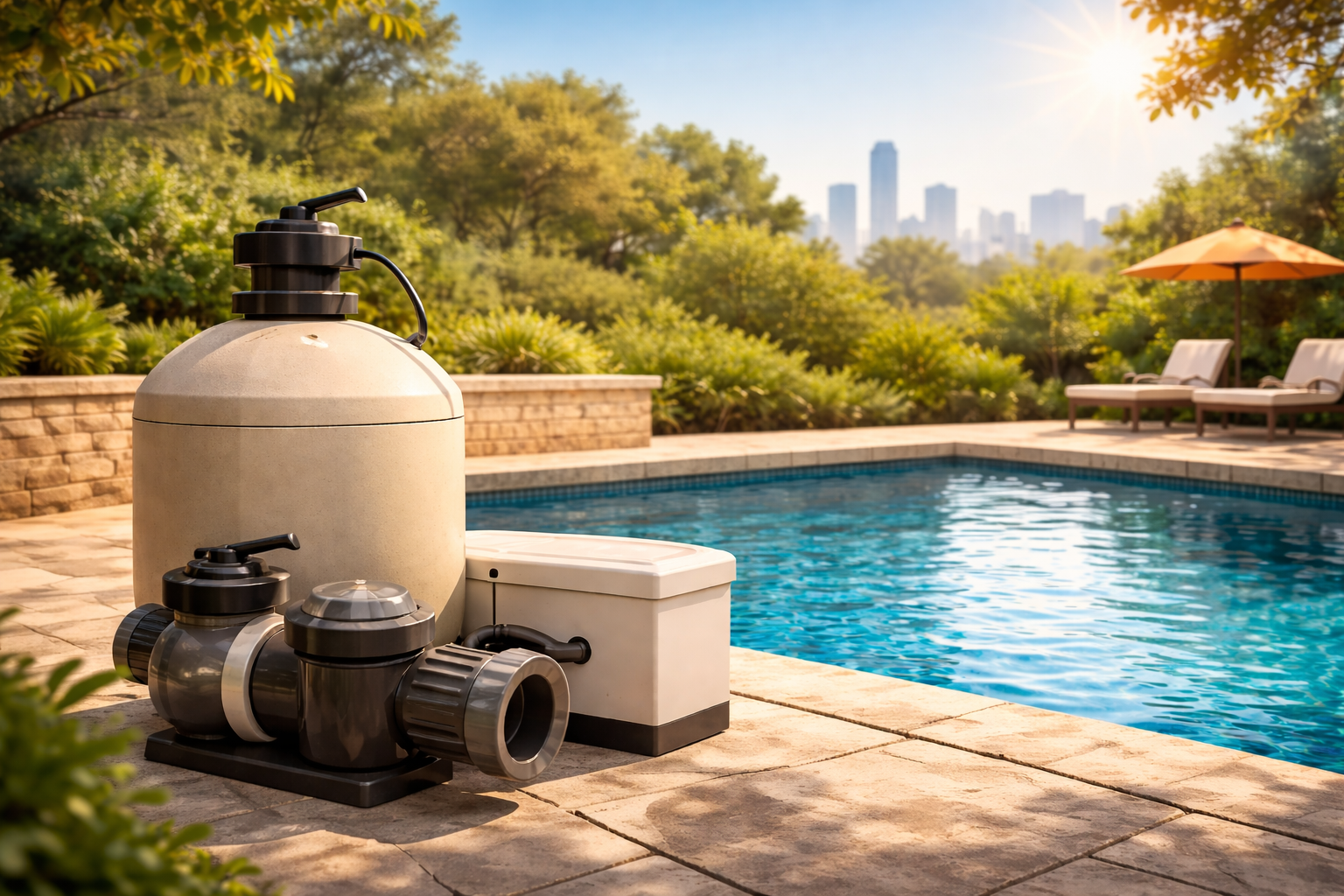
- Filter maintenance (backwashing for sand filters, cleaning for cartridge systems)
- Equipment inspection
Service frequency matters in Texas. Weekly service is standard due to heat and rapid chemical depletion. Bi-weekly service works for some situations but expect more frequent chemistry issues. Monthly service provides only basic chemical balancing, which is typically insufficient for Texas conditions.
Beyond Basic Cleaning
Comprehensive pool maintenance services should include periodic deep cleaning of filters (monthly to quarterly depending on filter type), acid washing when needed to remove stains and buildup, tile cleaning to remove calcium deposits, and seasonal equipment servicing.
Repair Capabilities
Pool equipment breaks down. Pumps typically last 8-12 years, filters need replacement, heaters require maintenance. Choose a company that also offers pool repair services so you’re not coordinating with multiple vendors when something breaks.
Ask about their capabilities with:
- Pump and motor replacement
- Filter repairs and upgrades
- Plumbing and leak repairs
- Equipment automation
- Lighting repairs
Specialty Services
Consider whether you might need:
- Green pool recovery: Restoring severely neglected pools requires specialized knowledge – it involves shock treatments, algaecide application, extensive brushing, and continuous filtration, not just adding extra chlorine
- Commercial pool service: Hotels, apartments, and community pools have higher bather loads and different maintenance requirements
- Saltwater system expertise: These systems have specific maintenance needs different from traditional chlorine pools
Evaluate Communication Practices
Response Time
Call or email with questions and track response time. Same-day responses indicate good customer service. Delays of several days suggest the company is overwhelmed or doesn’t prioritize communication.
Service Communication
Ask about their practices:
- Do they notify you before arrival?
- How do they confirm service completion?
- Do they provide detailed service reports?
- Can you reach your technician directly?
We provide text notifications 30 minutes before arrival and email reports with before-and-after photos showing completed work. This transparency documents service quality without requiring you to be home during service.
Written Agreements
Everything should be in writing: services included, frequency, who provides chemicals, pricing, payment terms, and cancellation policy. Written contracts prevent misunderstandings about what’s included or what services cost.
Technician Consistency
Ask if you’ll have a dedicated technician. When the same person services your pool weekly, they notice subtle changes indicating developing problems. They learn your equipment, your preferences, and your pool’s quirks. High technician turnover means constantly re-explaining issues and losing that continuity of care.
Understand Pricing
What Affects Cost
Pool service costs vary based on several factors:
- Pool size: Larger pools require more chemicals and time
- Equipment type: Cartridge filters need more frequent cleaning than sand filters
- Surrounding landscape: Heavy tree coverage increases cleaning time
- Service frequency: Weekly costs more than bi-weekly
- Location: Travel distance affects pricing
Getting Accurate Quotes
Request on-site assessments rather than phone quotes. During the visit, the technician should measure your pool, inspect equipment condition, assess surrounding conditions that affect maintenance, and test current water chemistry before providing written estimates.
Comparing Prices
Collect quotes from 3-5 companies, but don’t choose based solely on lowest price. Cheap service often means minimal chemicals, rushed work, inexperienced technicians, or no insurance. Quality service costs more because it includes proper chemicals in correct amounts, thorough work that prevents problems, certified technicians, and insurance protection.
Cutting corners leads to expensive repairs later – green pool recovery costs $500+, pump replacements run $800-1,500, and replastering can cost thousands.
What’s Included
Clarify what’s included in quoted prices. Typically, regular service includes labor, basic chemicals (chlorine, pH adjusters), and routine equipment checks. Repairs and parts, specialty chemicals (phosphate removers, algaecides), and major chemical corrections are usually charged separately.
Questions to Ask Before Hiring
Before committing, ask:
Credentials:
- Are you licensed and insured? May I see documentation?
- What professional certifications do your technicians hold?
- How long have you been servicing pools in this area?
Service Details: 4. What exactly is included in your standard service? 5. How often will you service my pool? 6. Will I have the same technician each visit? 7. Who provides the chemicals? 8. How do you handle equipment repairs?
Communication: 9. How will I know when you’ve serviced my pool? 10. Can I contact my technician directly? 11. What’s your cancellation policy? 12. Can you provide references?
Direct, confident answers demonstrate professionalism. Evasive responses or inability to answer basic questions signal problems.
Red Flags to Avoid
Watch out for companies that:
- Can’t provide proof of licensing and insurance
- Use high-pressure sales tactics or demand immediate decisions
- Refuse to provide written agreements
- Have numerous negative reviews about the same issues
- Provide vague answers about water chemistry
- Consistently miss appointments
- Push unnecessary equipment replacements
- Claim to service an unrealistic number of pools (one technician can’t properly maintain 50+ pools)
Making Your Decision
After researching companies, compare based on valid licensing, current insurance, positive reviews, clear service agreements, and reasonable pricing. Choose the company that best balances credentials, experience, service quality, and price.
The cheapest option rarely provides the best value – you typically get what you pay for. But the most expensive isn’t automatically superior either. Request a trial period if available to evaluate service quality before committing long-term.
Starting Service Successfully
First Month
The initial 30 days establish your working relationship. Your technician learns your pool and equipment, water chemistry stabilizes under professional care, and minor issues are identified. Be available during early visits to discuss your pool’s history, previous problems, and equipment age.
Setting Up for Success
Help your technician by ensuring gate access on service days, securing pets during service, removing pool toys and obstacles, and communicating schedule changes promptly. Report problems between visits rather than waiting – catching issues early prevents bigger problems.
Monitoring Quality
Pay attention to water clarity and balance, consistent arrival times, thorough cleaning, and responsive communication. If problems arise, address them promptly. Most issues resolve through clear communication. Persistent problems after giving the company a fair chance to improve indicate you may need to switch providers.
The Bottom Line
Choosing a pool service company in Texas starts with verifying proper licensing and insurance. Check reviews across multiple platforms and talk to current customers. Compare service offerings and pricing, but prioritize expertise and professionalism over the lowest price.
Ask questions about certifications and experience to understand their technical knowledge. Get everything in writing before committing.
Your pool represents a significant investment. Proper maintenance protects that investment while ensuring safe, enjoyable swimming for your family.
Since founding Bluewater Pools in 2020, we’ve seen how proper credentials and a scientific approach to water chemistry make the difference. Our technicians hold CPO certification, we maintain an A rating with the BBB, and we’re active members of the Pool & Hot Tub Alliance.
Ready to experience certified expertise and genuine customer care? Contact Bluewater Pools for a free pool assessment in San Antonio or Austin. We’ll evaluate your pool, explain our approach to maintenance, and provide transparent pricing with no pressure.