Gas vs Electric Pool Heater in Texas: Which Is Best for Your Pool?
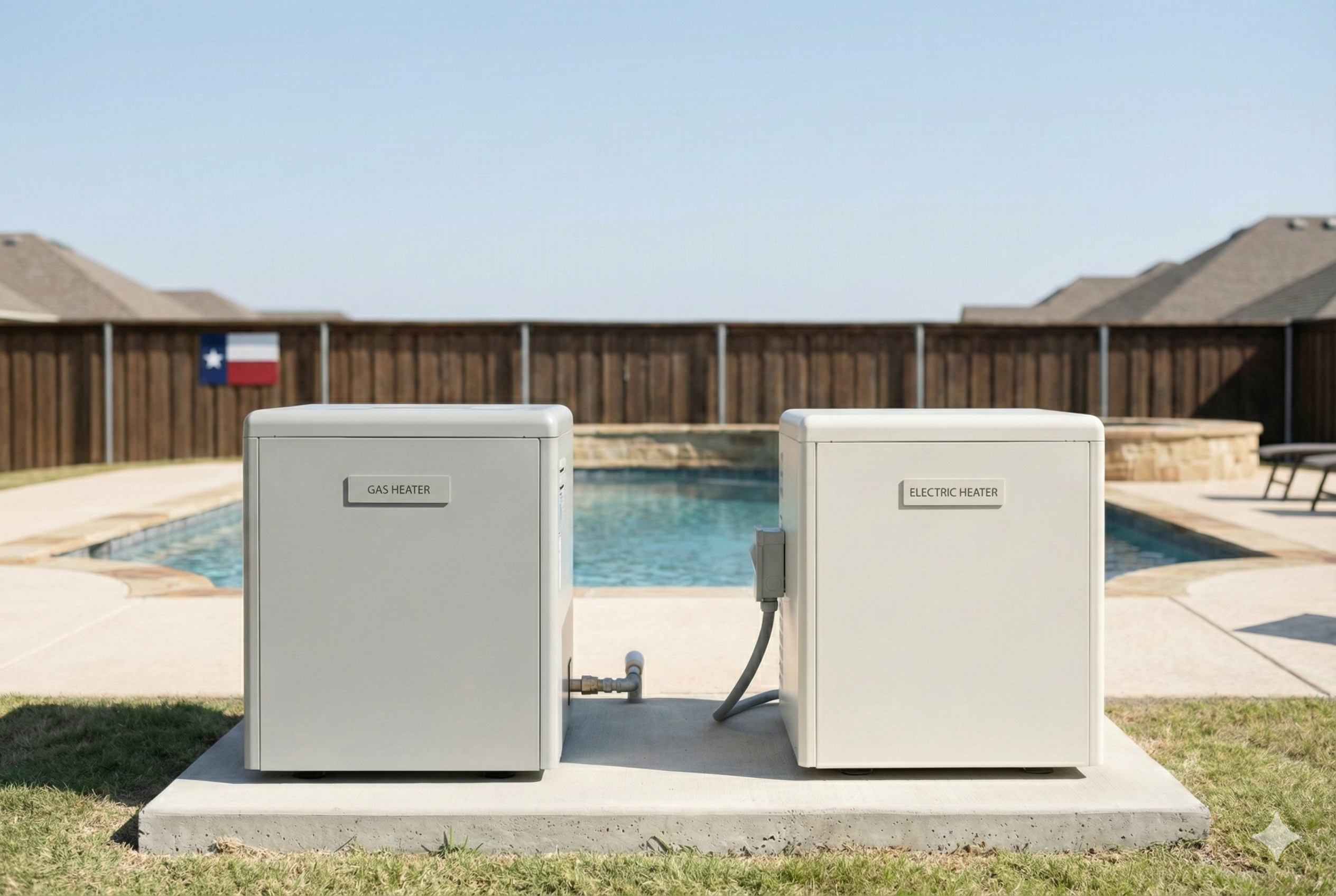
If you’re looking to extend your swimming season in Texas, choosing between a gas and electric pool heater is one of the most important decisions you’ll make. Gas heaters heat water quickly and work in any temperature, making them ideal for occasional use.
Electric heat pumps cost far less to operate and work efficiently in Texas’s mild climate, making them better for frequent heating. For most Texas pool owners who swim regularly from spring through fall, an electric heat pump offers the best value with operating costs of $50-$150 per month compared to $200-$400 for gas. At Bluewater Pools, we install these types of heaters throughout Austin and San Antonio, Texas.
The right choice depends on how you use your pool, your local climate, and whether you prioritize speed or efficiency. This guide breaks down everything you need to know to make the best decision for your situation.
How Gas and Electric Pool Heaters Work
Understanding how each heater type operates helps explain their different strengths and weaknesses.
Gas Pool Heaters
Gas heaters burn natural gas or propane in a combustion chamber to rapidly heat water as it circulates through the system. They typically output 250,000 to 400,000 BTU per hour, allowing them to raise pool temperature by several degrees within an hour or two.
Gas heaters connect to your home’s natural gas line or use standalone propane tanks. Natural gas requires plumbing into your existing gas supply, while propane offers portability for areas without gas service. The key advantage is speed. You can heat a cool pool for an impromptu swim or warm a spa to 100°F on short notice, regardless of outside air temperature.
Electric Heat Pump Pool Heaters
Electric heat pumps don’t generate heat directly. Instead, they capture warmth from ambient air and transfer it to pool water through a refrigeration cycle. Air flows over an evaporator coil containing refrigerant, which absorbs heat. The refrigerant compresses into a hot gas, then a heat exchanger releases that heat into the pool water.
Heat pumps output 50,000 to 140,000 BTU per hour depending on the model and conditions. They heat water more gradually than gas heaters, taking several hours or days for large temperature changes. The tradeoff is remarkable efficiency. Heat pumps can deliver 4 to 6 units of heat for every 1 unit of electricity consumed, especially when outdoor temperatures exceed 50°F.
Upfront Cost Comparison
Initial investment varies between heater types, though the difference is smaller than many people expect.
Gas heaters typically cost $1,500 to $3,500 for the unit itself. Installation adds $500 to $1,500, with higher costs if you need to extend gas lines or install propane infrastructure. Many urban Texas areas have natural gas service available, but pools far from existing gas hookups require additional plumbing work.
Electric heat pumps run $2,000 to $4,000 for the unit. Installation is usually simpler at $500 to $1,000, requiring electrical hookup and proper airflow positioning. You’ll need adequate electrical capacity at your service panel, but installation is generally more straightforward than gas. Complete installation for either heater type typically ranges from $2,000 to $5,000 for standard residential pools.
Cost Factor | Gas Pool Heater | Electric Heat Pump |
Unit Cost | $1,500 - $3,500 | $2,000 - $4,000 |
Installation | $500 - $1,500 | $500 - $1,000 |
Infrastructure Needs | Gas line or propane setup | Adequate electrical capacity |
Operating Costs and Energy Efficiency
Monthly energy costs reveal the biggest difference between these two systems.
Monthly Operating Costs in Texas
Gas heaters cost substantially more to run. Heating a pool with natural gas typically runs $200 to $400 per month during the heating season, with costs of approximately $3 to $9 per hour of operation depending on heater size and current gas prices. Propane costs even more per hour than natural gas. You pay only when you use it, but continuous heating adds up quickly.
Electric heat pumps cost dramatically less. Most Texas pool owners spend $50 to $150 per month maintaining comfortable pool temperatures with a heat pump. Even larger pools or cooler weather usage typically stays below $150 monthly. Heat pumps use minimal energy in typical Texas spring and fall weather while gas fuel costs accumulate rapidly.
The U.S. Department of Energy confirms that running a heat pump year-round at 85°F can save up to $400 annually compared to a gas heater.
Why Heat Pumps Cost Less to Run
The efficiency difference explains the cost gap. Gas heaters convert about 80% of fuel energy into heat, losing 20% through exhaust. Heat pumps achieve 400% to 600% efficiency by moving existing heat rather than generating it. They deliver 4 to 6 times more heat energy than the electrical energy consumed.
This efficiency advantage holds in mild to warm air temperatures. Heat pump efficiency drops below 50°F when there’s less ambient heat to capture. In Texas, this limitation rarely matters during the pool season. Most of the year provides ideal conditions for heat pump operation, making them far more economical for maintaining comfortable water temperatures.
Heating Speed and Performance
How quickly you can heat your pool matters for different usage patterns.
Gas Heaters for Quick Heating
Gas heaters excel at rapid temperature changes. A 400,000 BTU gas heater can raise a medium pool’s temperature by 2 to 3 degrees per hour. You can heat a cool pool to swimming temperature within hours, or warm a spa to 100°F on demand.
This speed works regardless of outdoor conditions. A gas heater fires and heats water even when the air temperature drops to 40°F. For spontaneous pool use or occasional heating, gas heaters deliver unmatched convenience. Users appreciate feeling hot water flow from return jets within minutes of starting the heater.
Heat Pumps for Consistent Warmth
Heat pumps provide steady, gradual heating. Rather than quick temperature spikes, they maintain set temperatures efficiently over time. Many Texas pool owners run heat pumps consistently during the season or overnight to keep pools around 80°F, rather than letting the pool cool completely.
For planned swimming schedules and regular use, this approach works perfectly. The heat pump runs economically to maintain comfort without the fuel costs of gas heating. For a spontaneous midnight swim in February, however, a heat pump won’t heat water quickly enough.
Texas Climate Considerations
The Texas climate often favors heat pumps. In Central and South Texas (Austin, San Antonio, Houston), winter days frequently reach the 50s or higher, staying within a heat pump’s effective range. During mild winters and cool spring or fall nights, electric heat pumps maintain swimmable pools.
Rare Texas cold snaps near freezing can challenge heat pumps, while gas heaters maintain performance. In North Texas (Dallas/Fort Worth), colder winters create more situations where gas heating provides an advantage. Gas heaters work better for extending swimming into the coldest months, though heat pumps suffice for typical spring through fall use.
Lifespan and Maintenance Requirements
Long-term costs include equipment replacement and upkeep.
Expected Lifespan
Electric heat pumps typically last 10 to 20 years with proper maintenance. Gas heaters generally need replacement after 5 to 10 years. Heat pumps resemble HVAC units with long service lives, while gas units have high-temperature components that corrode or wear out faster.
Texas’s mild climate helps both heater types. Harsh winterizing isn’t necessary, but gas burners, heat exchangers, and igniters face more stress than heat pump compressors and fans.
Maintenance Needs
Both systems benefit from annual professional service. Gas heaters require more frequent attention. Burners need cleaning, igniters occasionally fail, and heat exchangers can accumulate scale or soot. Professional service visits run approximately $100 to $200 each.
Heat pumps need refrigerant checks, coil cleaning, and airflow verification. With fewer combustion components, they typically require less maintenance. Service visits average $75 to $150 and occur less frequently than gas heater tune-ups.
Repair Costs
Repair expenses differ significantly between systems. Through our work providing pool cleaning services across Austin and San Antonio, we’ve seen how repair costs impact long-term ownership. Common gas heater repairs like fixing burners, replacing thermostats, or addressing heat exchanger issues typically cost $400 to $1,200. These repairs involve labor-intensive work on combustion components, piping, and chambers.
Electric heat pump repairs usually run $200 to $800 for typical issues. Replacing capacitors, fans, or control boards requires less complex work than gas system repairs. While both systems need maintenance to prevent major issues, gas heaters generally cost more when something breaks.
Regular maintenance extends heater life significantly. Keeping filters clean, maintaining proper water chemistry to prevent corrosion, and scheduling annual check-ups maximize your investment in either system.
Environmental Impact
For environmentally conscious pool owners, the choice between gas and electric has clear implications.
Gas heaters burn fossil fuel directly, emitting carbon dioxide and other combustion byproducts on-site. Your carbon footprint ties directly to usage frequency. Natural gas and propane both release CO₂, with additional environmental impacts from fuel extraction and transportation.
Electric heat pumps produce no on-site emissions. Your overall carbon footprint depends on electricity generation sources. Texas’s grid includes natural gas, wind, coal, and solar. Even with mixed sources, heat pumps use far less energy for the same heating effect, resulting in lower net carbon emissions per degree of pool heating. Many Texas utilities increasingly incorporate wind and solar, allowing heat pumps to leverage renewable energy.
For sustainability goals, electric heat pumps align better as the greener choice with a smaller carbon footprint. Solar pool heating offers virtually zero operating emissions for those seeking maximum environmental benefits.
Which Pool Heater Is Best for Texas?
The ideal choice depends on your specific situation and priorities.
For most Texas pool owners swimming spring through fall, an electric heat pump offers the superior option. Texas’s long warm season and mild shoulder seasons create ideal conditions for heat pump efficiency. You’ll save substantially on energy bills over the long term while maintaining comfortable temperatures throughout the extended swimming season.
If you heat your pool occasionally or primarily use a spa, a gas heater might serve you better. For heating the pool just a few holiday weekends, or firing up an attached spa on short notice, gas provides unmatched convenience. While you pay more per hour of heat, sporadic use keeps total fuel costs manageable. Gas heaters also deliver warmth during rare Texas cold snaps when heat pumps struggle.
For environmentally conscious pool owners or those with solar panels, electric heat pumps align with renewable energy goals and cutting carbon footprints. Gas heaters directly emit carbon and can’t leverage clean energy sources.
Infrastructure availability matters. Without natural gas service near your pool equipment, installing gas becomes more complicated and expensive. Many newer Texas developments rely on electric appliances. In such cases, a heat pump offers the more straightforward option if your electrical service can support the unit’s amperage.
Making Your Decision
Consider these key factors when choosing your pool heater:
Usage patterns determine which heater makes sense. Frequent swimmers benefit from heat pump efficiency. Occasional users appreciate gas heater speed.
Climate conditions in your specific Texas location affect performance. Central and South Texas’s mild winters favor heat pumps. North Texas’s colder stretches may justify gas for year-round swimming.
Budget considerations include both upfront and operating costs. Heat pumps cost slightly more initially but save substantially monthly. Gas heaters have lower equipment costs but higher fuel expenses.
Environmental priorities point toward electric heat pumps as the more sustainable choice with lower overall emissions.
Many Texas pool owners actually use a hybrid approach. A heat pump handles most seasonal heating efficiently, with a gas heater available for the coldest days or for an attached spa requiring quick high heat.
Local pool professionals can assess your specific situation, size the heater properly for your pool volume, and provide cost-benefit analysis tailored to your needs. Proper installation and regular maintenance ensure whichever system you choose runs efficiently and safely throughout its lifespan.
Keep Your Pool Comfortable Year-Round
Choosing between gas and electric pool heaters involves weighing upfront costs against operating expenses, heating speed against efficiency, and convenience against sustainability. For Texas pool owners, the state’s favorable climate often makes electric heat pumps the smart choice for extended seasonal use, delivering comfortable swimming temperatures at a fraction of gas heating costs.
Whether you’re extending your swim season into spring and fall, maintaining consistent temperatures for daily exercise, or simply want the flexibility to use your pool whenever the mood strikes, the right heater transforms your pool from a summer-only amenity into a year-round lifestyle feature.
Ready to explore pool heating options for your Texas pool? Contact Bluewater Pools at 512-886-7665 or email info@bluepoolwater.com. Our CPO-certified technicians serve the Austin and San Antonio areas and can help you choose and install the perfect heating system for your needs. We provide complete pool care, from regular pool maintenance services to pool repair and equipment installations.