Common Pool Repair Costs in Texas: What to Expect in 2025
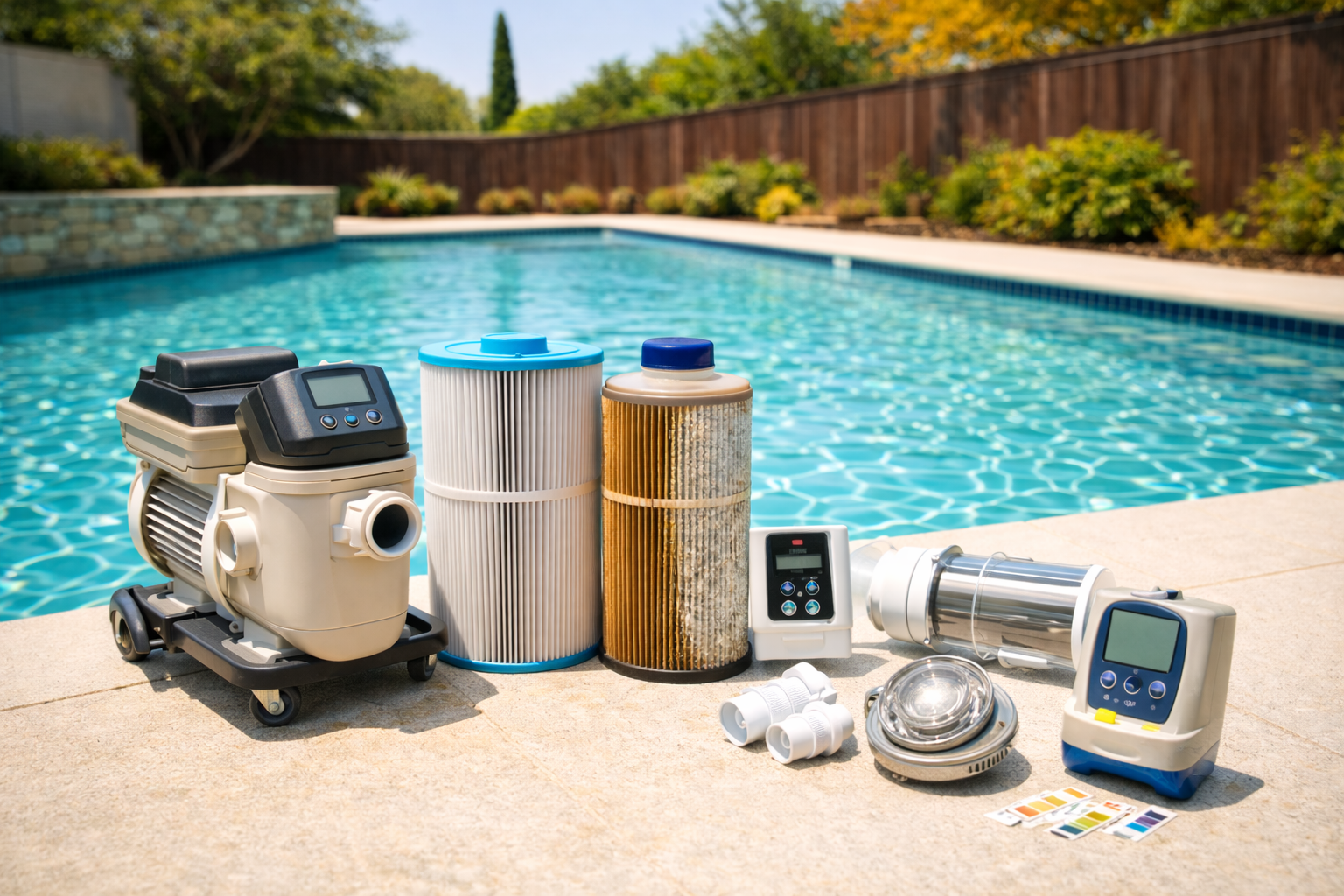
Pools, we’ve helped hundreds of San Antonio and Austin homeowners navigate these repair decisions with trPool repairs in Texas typically range from a few hundred to over a thousand dollars, depending on which component needs attention. Understanding these costs helps you budget appropriately and recognize when a quote is reasonable. The most common repairs include pool pumps ($250-$1,200), heaters ($300-$1,200), filters ($75-$800), lights ($65-$1,700), salt chlorinators ($600-$1,200), and plumbing issues ($200-$1,000). At Bluewateransparent pricing and expert guidance.
While price matters, the quality of repair work is equally important. Professional repairs performed by certified technicians ensure your pool equipment functions safely and lasts longer.
What Affects Pool Repair Costs?
Several factors influence how much you’ll pay for pool repairs in Texas. The component type and extent of damage play the biggest roles. A simple seal replacement costs far less than a full equipment replacement.
Your pool’s size and equipment specifications also matter. Larger pools require bigger pumps and more expensive parts. The Texas climate adds another layer of complexity. Our intense heat and sun exposure can accelerate equipment wear, sometimes requiring more extensive repairs than in milder climates.
Labor costs and technician expertise also factor into the final price. Licensed technicians with RAIL certification (Residential Appliance Installer License) are required for electrical work on pool equipment in Texas. Certified Pool Operators bring specialized knowledge that prevents recurring issues and ensures code-compliant installations.
Material costs have also increased in 2026. Copper prices have risen by over 10%, affecting pump motors and heater exchangers. Licensed technician rates now range from $85 to $120+ per hour, reflecting the high barrier to entry created by Texas licensing requirements.
Pool Pump Repair and Replacement Costs
Pool pumps work hard to keep your water circulating, making them among the most frequently repaired components. In Texas, pump repairs typically cost between $250 and $800 for common issues like worn seals, failed capacitors, or damaged impellers.
Full pump replacements run higher, usually $1,500 to $2,500 installed for modern variable-speed pumps. The exact cost depends on your pump’s horsepower, brand, and features. Variable-speed pumps are now the standard for most replacements, as Department of Energy regulations have effectively banned inefficient single-speed pumps.
Variable-speed pumps offer energy savings of up to 90%, which can save $300-$500 annually on electricity costs. The payback period for choosing a new variable-speed pump over repairing an old single-speed motor is approximately 2 years.
Signs your pump needs attention include unusual noises, reduced water flow, frequent circuit breaker trips, or visible leaks around the motor housing. Addressing these problems quickly prevents more expensive damage to your pool’s circulation system.
Pool Heater Repair Costs
Heater repairs vary significantly based on whether you have a gas or electric system. Gas heater repairs typically cost $400 to $1,200 for issues like burner cleaning, thermostat replacement, or gas valve work. Electric heat pumps are generally simpler and cost $300 to $800 to repair.
Minor heater repairs (like replacing a thermostat or cleaning a burner) might run $300 to $600. More extensive work involving heat exchangers can cost $2,800 to $4,500. Heat exchanger failures often make full-unit replacement the more economical option.
The rise in copper prices in 2026 has made copper heat exchangers more expensive, underscoring the importance of proper water chemistry to prevent corrosion and extend equipment life.
Because heaters involve both gas valves and electrical elements, professional repair is the safest choice. A certified technician ensures the repair meets safety codes and is covered by warranty.
Pool Filter Repair and Maintenance Costs
Texas pool owners use three main filter types: sand, cartridge, and diatomaceous earth (DE). Filter maintenance costs depend on which system you have.
Sand filters typically need cleaning or minor repairs costing $150 to $400. Media replacement (which you’ll need every 5-7 years) runs $300 to $600.
Cartridge filters are usually cheaper to maintain. Cleaning costs $100 to $200, while replacement elements (a set of 4) cost $300 to $600. Many pool owners handle cartridge cleaning themselves between professional services.
DE filters fall in the middle, with repairs or tuning costing $200 to $500, and full-grid replacements costing $400 to $800.
Proper filter maintenance protects your entire pool system. A clogged or damaged filter forces your pump to work harder, potentially leading to premature pump failure.
Pool Light Repair and Replacement Costs
Pool lighting involves both water and electricity, which means safety is paramount. Simple light repairs (replacing a gasket or niche seal) typically cost $65 to $150 per light.
Fixture replacements are significantly more expensive. LED fixtures run $800 to $1,700 installed. Modern LED lights are sealed resin-filled units that cannot be opened to replace individual bulbs. The entire fixture must be replaced when it fails.
Because of the electrical complexity, pool light work should always be handled by a licensed professional. NEC 2026 electrical codes require GFCI protection on all pool electrical equipment, and any lighting repair may trigger requirements to upgrade the electrical system to the current code. Many Texas pool companies offer flat pricing for light work, but expect to pay several hundred dollars for safe, code-compliant service.
Salt Chlorinator Repair Costs
If you have a saltwater pool, your chlorinator cell is a common maintenance item. Replacing a salt cell typically costs $600 to $1,200 for a 40,000-gallon pool, depending on your system’s model and size.
If the control unit or internal circuits fail, board replacement costs $500 to $900. Quality matters here. Choosing reputable brands like Hayward, Pentair, or Jandy typically means longer cell life and fewer issues.
Most salt cells need replacement every 3-5 years. In Texas, high water temperatures and calcium hardness can shorten cell lifespan compared to cooler climates. Using OEM or high-quality aftermarket cells provides better longevity than cheap alternatives that might save money upfront but require more frequent replacement.
Above-Ground Plumbing and Drain Cover Repairs
Visible PVC plumbing and pool drain covers often get overlooked until something breaks. Plumbing leak repairs generally range from $200 to $1,000 in Texas, depending on accessibility and the extent.
Simple above-ground leaks might cost $200 to $400 to fix. If the leak stems from a cracked valve body or pump housing (common after freeze events), the cost rises to $400 to $800. Complicated under-deck piping requires more labor and can cost significantly more. While PVC parts themselves are inexpensive, the labor involved in proper diagnosis, repair, and pressure testing adds to the total.
Drain covers and pool grates must be replaced when damaged (both for safety and proper pool function). VGB Act compliance requires properly maintained drain covers with expiration dates. While the cover itself might only cost $20 to $50, professional installation and code verification typically bring the total to a few hundred dollars.
Texas Pool Repair Cost Summary
| Component | Typical Repair Cost | Replacement Cost |
| Pool Pump | $250–$800 | $1,500–$2,500 (VSP) |
| Gas Heater | $400–$1,200 | $1,500+ |
| Electric Heat Pump | $300–$800 | $1,200+ |
| Sand Filter | $150–$400 | $300–$600 (media) |
| Cartridge Filter | $75–$150 (cleaning) | $300–$600 (elements) |
| DE Filter | $200–$500 | $400–$800 (grids) |
| Pool Light | $65–$150 | $450–$1,700 |
| Salt Chlorinator | $500–$900 (board) | $600–$1,200 (cell) |
| Plumbing Leaks | $200–$1,000 | Varies |
Why Quality Matters More Than Price
Choosing the lowest repair quote can be shortsighted. Pool repairs involve electrical, plumbing, and structural work where expertise matters. Professional pool repair technicians have the knowledge and specialized tools to provide quality repairs that last.
Licensed technicians don’t just fix the immediate problem. They identify underlying issues that could cause future failures. Texas law requires RAIL certification for anyone who repairs or replaces pool electrical equipment. Using unlicensed labor creates liability risks and may void insurance policies in the event of an accident.
Many reputable companies back their work with warranties. If a repair fails, they’ll return at no extra charge.
By contrast, bargain repairs or DIY attempts risk improper sealing, mismatched parts, or code violations. These mistakes can lead to recurring leaks, equipment burnout, or safety hazards.
Spending more upfront for certified, professional service often saves money in the long term by preventing recurring problems and premature equipment replacement.
Get Professional Pool Repair in San Antonio and Austin
Pool equipment repairs require technical knowledge and proper tools. At Bluewater Pools, our technicians hold multiple professional certifications, including CPO (Certified Pool Operator), CMS (Certified Maintenance Specialist), CPI (Certified Pool Inspector), RAIL (Residential Appliance Installer License), and OSHA safety certification. This expertise ensures we diagnose issues accurately and complete repairs correctly the first time.
We serve pool owners throughout San Antonio and Austin, offering comprehensive pool repair services backed by our satisfaction guarantee. Our scientific approach to pool care means we don’t just fix the immediate problem. We help you understand what caused it and how to prevent it in the future.
Whether you need pump repair, heater service, or help with mysterious leaks, contact Bluewater Pools at 512-886-7665 or email info@bluepoolwater.com. We’re here Monday through Friday, 7 am to 5 pm, ready to help you get your pool back in perfect working order.