How to Keep Leaves Out of Your Pool: Complete Texas Guide
Keeping leaves out of your pool protects water quality, prevents equipment damage, and saves you time and money. The most effective approach combines using pool covers or leaf nets, daily skimming and basket cleaning, optimizing water flow to move debris toward skimmers, and trimming overhanging branches. In Texas, where our mild climate means year-round leaf drop and intense sun accelerates pool problems, weekly maintenance is essential. Below, we’ll walk through each method so you can enjoy crystal-clear water without constant cleanup.
Why Leaves in Your Pool Are More Than a Nuisance
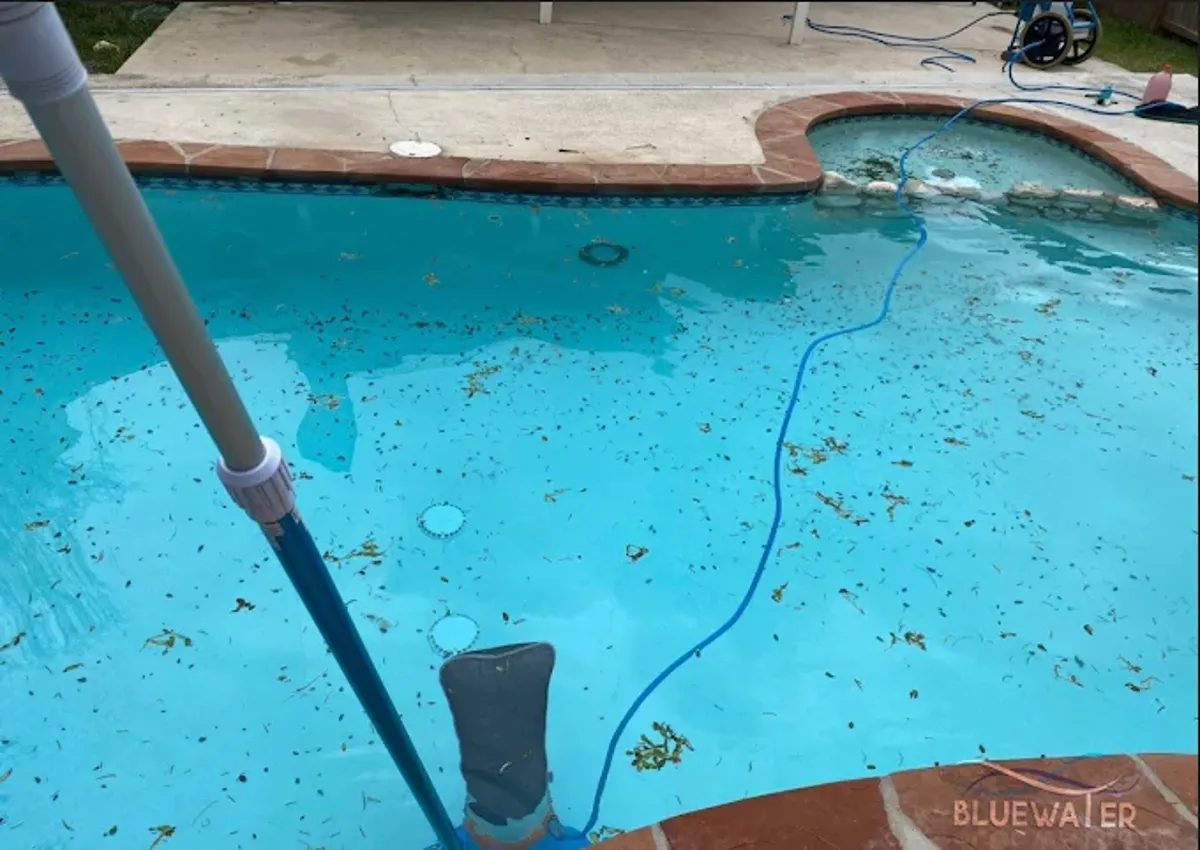
When leaves sink to the bottom of your pool, they don’t just sit there looking unsightly. Decomposing leaves release tannins that stain pool surfaces and create food for algae, while also adding phosphates that act as fertilizer for algae growth. This leads to green, cloudy water that requires heavy chemical use to correct.
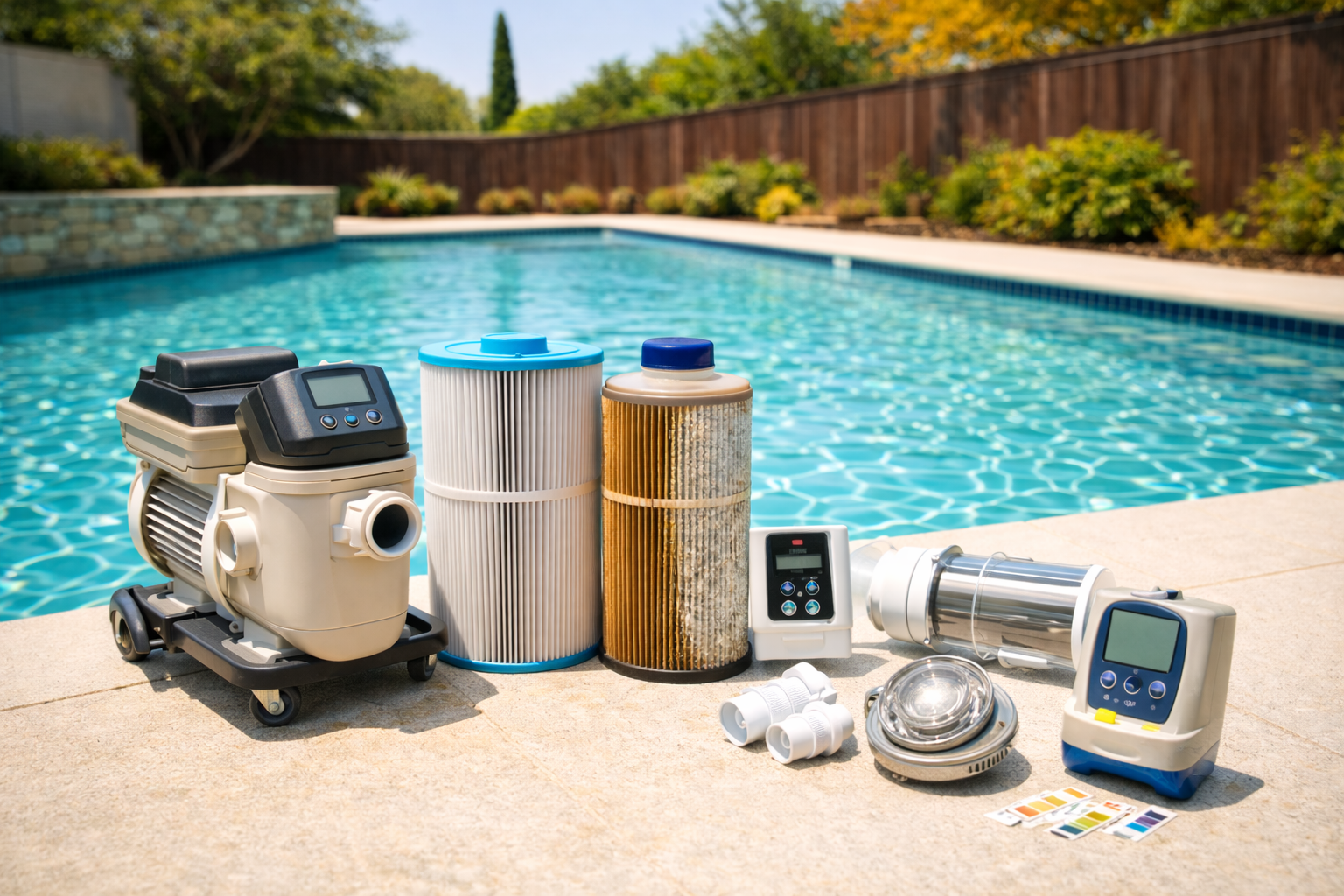
The problems don’t stop at water quality. Leaves clog skimmer baskets and filters, forcing pumps to work harder or even burn out. Replacing a burned-out pump or damaged filter system costs hundreds to thousands of dollars—far more than preventive maintenance.
In Texas specifically, our live oak trees drop leaves gradually throughout the year rather than all at once. Combined with our intense sun and heat, this means pools can deteriorate quickly if leaf debris isn’t addressed. That’s why we recommend weekly pool maintenance rather than bi-weekly or monthly service for Texas pool owners.
Use Pool Covers to Block Debris
Pool covers are the most effective barrier against leaves, blocking debris completely when the pool isn’t in use and drastically reducing cleanup time. They also help maintain water chemistry and temperature by reducing evaporation and limiting sunlight that drives algae growth.
Types of Covers for Leaf Control
Different cover types serve different purposes. Here’s how they compare:
| Cover Type | Best For | Pros | Cons |
| Solid safety cover | Complete debris blocking and winter protection | Stops all debris; insulates pool | Requires pump to remove rainwater; heavy to handle |
| Mesh/winter cover | Year-round use with drainage | Blocks leaves while draining rain; easy to clean | Allows fine particles through; less insulation |
| Leaf net catcher | Seasonal leaf protection | Quick debris removal; protects main cover | Must empty regularly; seasonal use only |
Solid safety covers fully enclose your pool and stop all debris. However, you’ll need a cover pump to remove accumulated rainwater. Without pumping off dirty water from the cover surface, that debris-filled water will spill into your pool when you remove the cover.
Mesh or winter covers offer a practical middle ground. These fine-mesh covers block leaves and debris while allowing rain to drain through, avoiding water buildup. They’re lighter and easier to clean than solid covers.
Leaf net catchers are lightweight mesh nets placed over your pool cover or directly on the water. These nets catch leaves in the fall so you can lift them off in one motion, saving time and reducing strain. After leaf season ends, remove the net to protect your main cover underneath.
For Texas pools, mesh covers or leaf nets work well during our extended fall season when live oaks gradually drop leaves over several months.
Daily Maintenance Makes the Difference
Even with a cover, you’ll need regular cleaning during heavy leaf periods. Here’s what works:
Skim Every Day
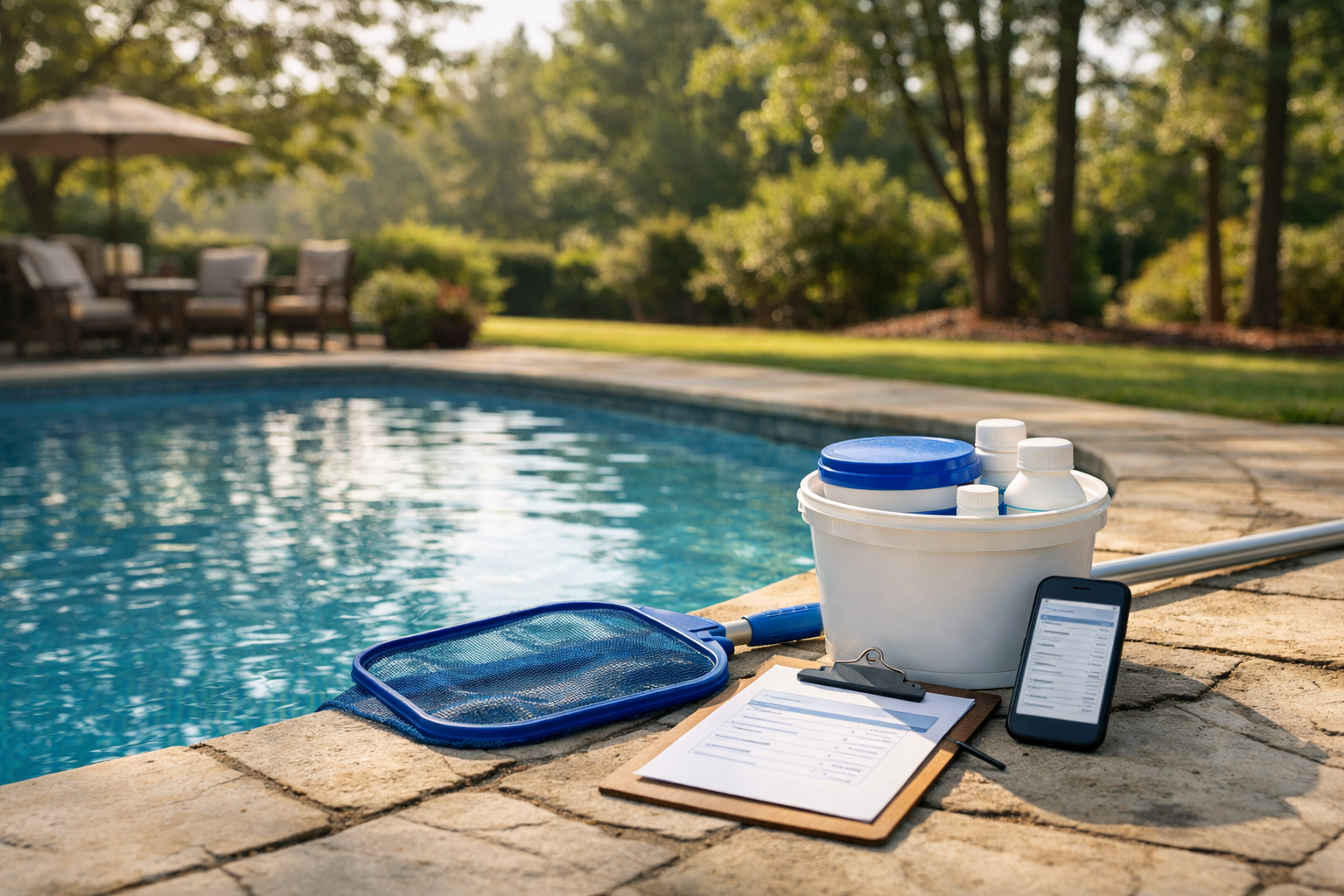
Use a long-handled skimmer net or leaf rake daily—especially after windy days—to remove floating leaves before they sink. This takes just a few minutes but prevents leaves from decomposing on your pool floor.
Empty Skimmer Baskets Frequently
Check and empty your skimmer baskets often. Full baskets can’t catch new debris, and they force your pump to work harder. Leaves can clog filters and skimmer baskets, leading to potential equipment damage if not removed regularly.
During our pool cleaning service visits, our technicians always empty skimmer baskets and inspect your filtration system. Between visits, make this a quick daily habit to protect your equipment.
Vacuum Settled Leaves
For leaves that have already sunk, use a manual pool vacuum or leaf vacuum. In extreme situations—like after a Texas storm—you may need to vacuum daily. Consider a vacuum with a leaf canister attachment that traps debris before it reaches your filter.
Don’t Blow Leaves Toward Your Pool
When cleaning your yard, direct leaf blowers away from the pool, as they can simply shift leaves that often drift back into the water. Instead, rake or mow leaves and bag them so they don’t blow toward the water.
Automate Your Leaf Control
If you want to reduce hands-on maintenance, automation helps:
Robotic Surface Skimmers
Small robotic skimmers float on the surface and suction debris automatically, running unattended and reducing manual skimming needs. Modern robotic skimmers digitally map your pool and target debris spots. Just empty the internal collection bin periodically.
The upfront cost runs several hundred dollars, but these devices work continuously without your involvement.
Optimize Water Flow
Adjust your return jets to create a gentle circular surface flow that carries leaves toward the skimmers. Even a slight ripple keeps debris moving instead of settling in corners.
Keep your water level at mid-skimmer height. If the water is too high, leaves float past the skimmer mouth; too low, and the skimmer sucks air. Proper water level ensures peak skimmer efficiency.
Prevent Leaves at the Source
Stopping leaves before they reach your pool saves the most time:
Trim Overhanging Branches
Cut back tree limbs hanging directly over your pool—even modest trimming drastically cuts the amount of leaves that fall into your water. Regular pruning, especially of dead or heavy branches each fall, reduces leaf debris and prevents branches from falling into the pool.
In Texas, live oaks are beautiful but notorious for year-round leaf drop. If you have live oaks near your pool, strategic pruning makes a significant difference.
Keep Your Yard Clean
Rake or mow leaves frequently, then dispose of or compost them to prevent wind-carried debris. Loose leaves in your yard will eventually blow into your pool, especially during our windy Texas springs.
Install Wind Barriers
Create windbreaks around the pool area with a low fence or dense hedge that catches airborne leaves before they reach the water. Small hedges or privacy fencing trap leaves while looking attractive. Even a fence between you and a neighbor’s leaf-heavy trees helps significantly.
Plant Strategically
If planting or landscaping, choose lower-maintenance plants near the pool, such as evergreen trees, shrubs, or plants that don’t drop leaves in fall. Some experts suggest tropical or non-fruiting plants, small trees, or hedges instead of large deciduous trees next to pools.
When to Call a Professional
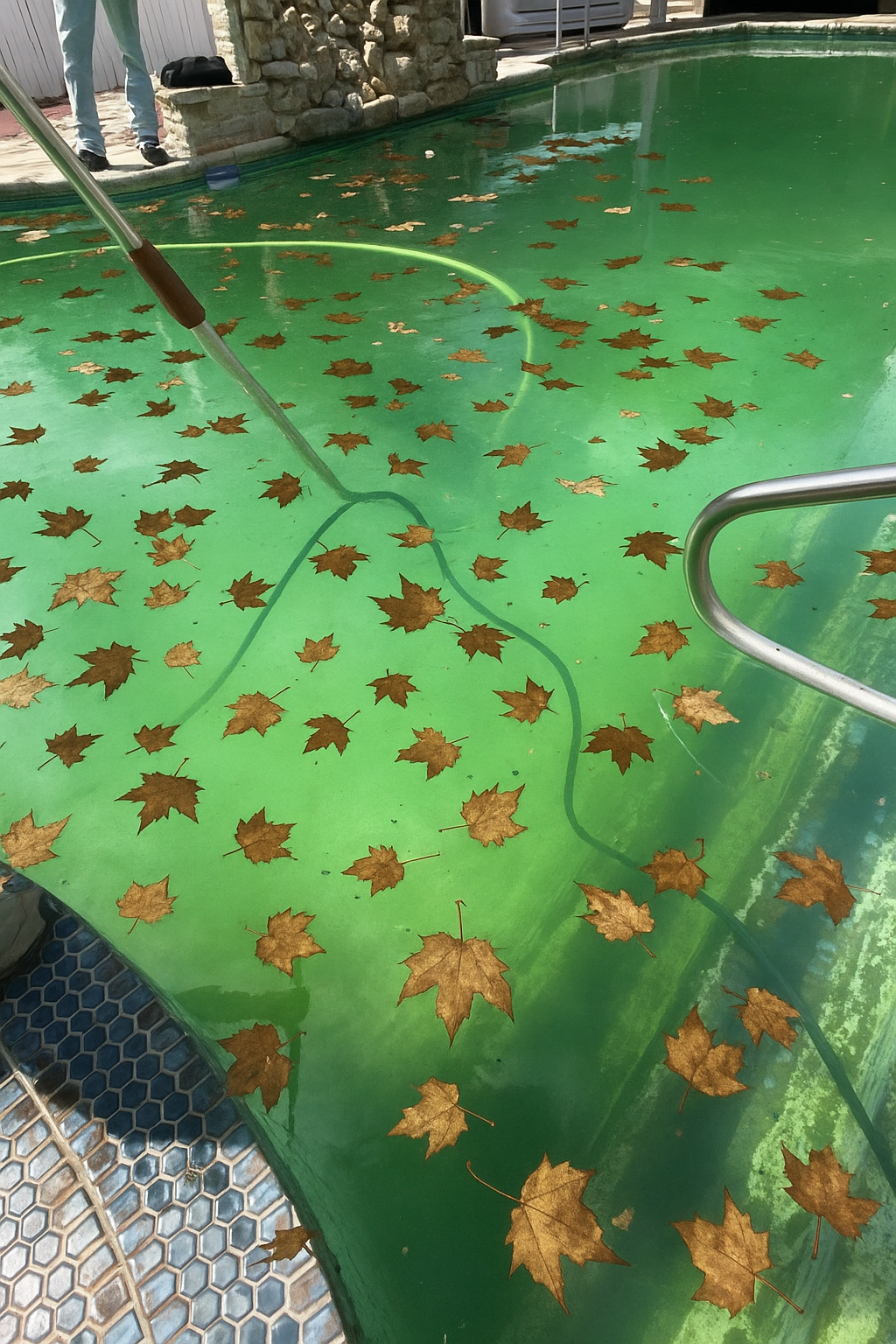
If your pool has already turned green from accumulated leaves and debris, you’re looking at more than routine maintenance. Our green pool cleaning service handles complete pool restoration—removing debris, balancing water chemistry, and getting you back to crystal-clear water.
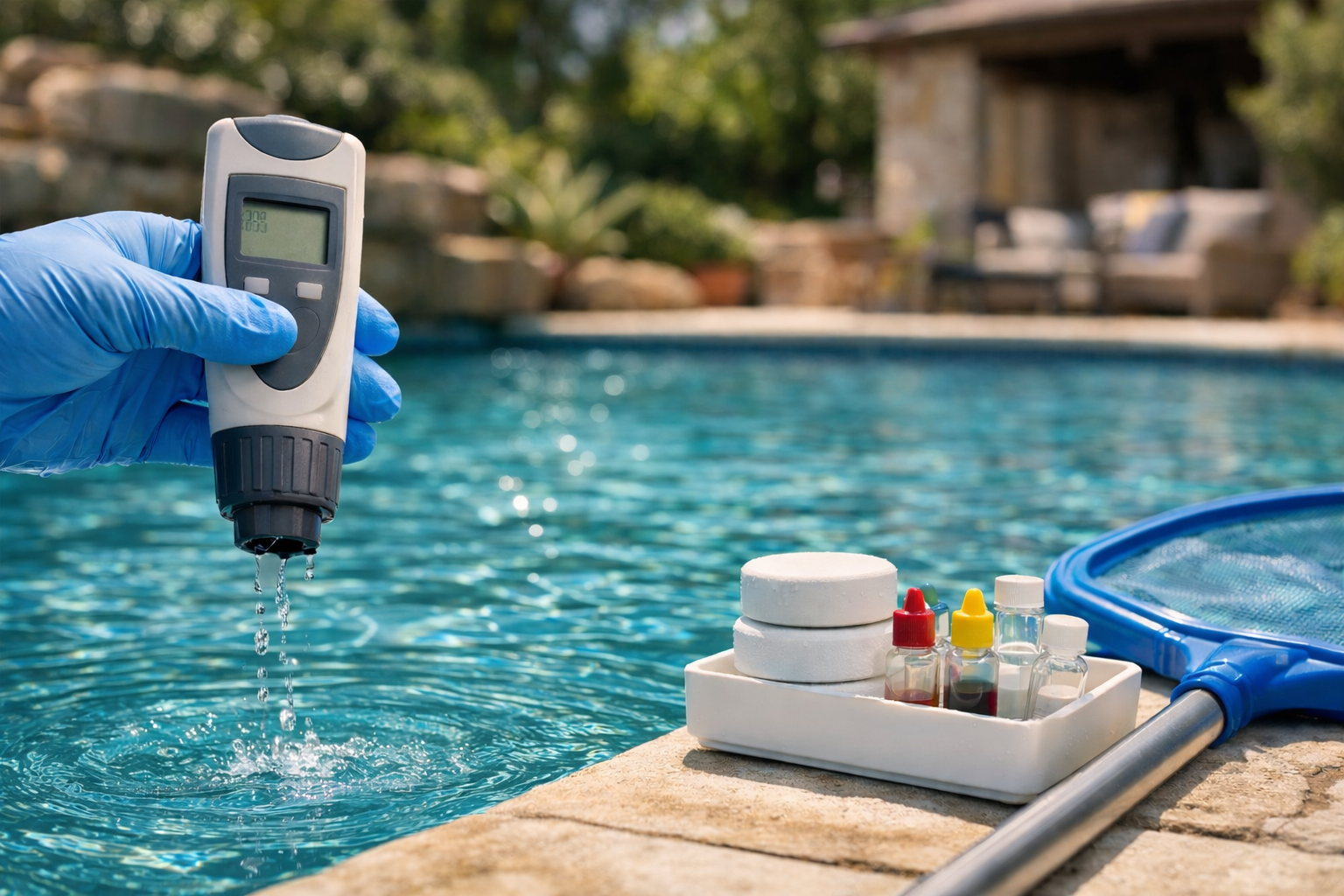
Regular professional maintenance also protects your investment. Our CPO-certified technicians handle all the science behind proper water chemistry, test beyond basic pH and chlorine levels, and catch small problems before they become expensive repairs. We provide all necessary chemicals, empty skimmer baskets, vacuum your pool, and inspect equipment during each visit.
Clogged filters and pumps are expensive to fix, and prolonged leaf coverage can stain pool surfaces. Using covers and nets can cut pool-cleaning time roughly in half, but combining professional service with preventive measures gives you the best results.
Keep Your Pool Leaf-Free Year-Round
In Texas, where mild weather means extended swimming seasons and year-round leaf drop from live oaks, staying ahead of leaf debris is essential. The most effective approach combines multiple strategies: using covers or leaf nets during peak seasons, skimming daily, maintaining proper water flow, and addressing the source by trimming trees and keeping your yard clean.
Ready to spend less time cleaning leaves and more time enjoying your pool? Contact Bluewater Pools for professional pool maintenance that keeps your water crystal-clear, protects your equipment, and gives you peace of mind. Our certified technicians serve San Antonio and Austin with weekly service designed for Texas pool owners.